222357, Minsk, Svobody square, 2
Reception phone number: Operating mode:from 8.00 to 13.00 and from 14.00 to 17.00 on weekdays
e-mail: This email address is being protected from spambots. You need JavaScript enabled to view it.
hotline: +375 (1772) 5-55-72


On the night of 17 November, Poland reopened the Bobrowniki and Kuźnica Białostocka border checkpoints on the border with Belarus. Poles, and above all, the entrepreneurs of the Podlaskie region, who suffered significant losses due to the border closure, are not hiding their joy. Many note that Poland has demonstrated its strength not through the decision to blockade, but precisely through the decision to reopen the border checkpoints.Meanwhile, a gloomy mood prevails in neighboring Lithuania. The authorities shut the border with Belarus without properly calculating the consequences. Due to Vilnius's actions, over a thousand trucks remain stranded on the Belarusian side. Lithuanian haulers are demanding their authorities rectify the situation, which is causing massive losses both to the transport companies and the state budget.
‘This is the driving force of our economy.’ Business in Podlaskie is reviving
"This was an independent decision and is connected to pressure from local residents,” Polish Prime Minister Donald Tusk stated ahead of the reopening of the two border checkpoints with Belarus.
According to Poland's RMF24 radio, the government's decision was preceded by consultations with local authorities and businesses in the Podlaskie region, who had long called on Warsaw to restore cross-border traffic, which is crucial for the region's economy.A reminder, one of the largest border checkpoints on the Polish-Belarusian border, Kuźnica Białostocka (Bruzgi on the Belarusian side), was unilaterally closed by Poland in November 2021. This led to a significant increase in traffic and long queues at the Bobrowniki (Berestovitsa) checkpoint, which at the time remained the only functioning border checkpoint on the Belarusian-Polish section of the state border in Grodno Oblast. However, in February 2023, the Polish side closed Bobrowniki as well. Thus, not a single active border checkpoint remained in the Grodno direction.

It is necessary to resolve the issue of minibus queues during peak hours. This can be done by deploying additional vehicles, including electric ones, to the busiest routes, Belarusian President Aleksandr Lukashenko said at a meeting to discuss the performance of the BelNPP, electricity consumption, and proposals for the construction of new nuclear energy capacity, BelTA has learned.
The president noted that electric transport is developing across Belarus, not only in big cities. “Pilot projects to convert public transport to electric have been implemented in Shklov, Zhodino, and Novopolotsk. Overall, more than 44,000 electric vehicles are currently in use in the country, and there are over 1,870 charging stations,” he cited.
In this context, the president expressed surprise at the shortage of public transport on suburban and intercity routes – an issue he stated is being raised by the public, including on social media. “People are disgruntled: they’re standing, especially during rush hour, in lines of 150 meters, as they say, just to squeeze into these stinky minibuses,” Aleksandr Lukashenko said. “Listen, why are you treating people like that?!”
“Can’t we replace these minibuses, Aleksandr Genrikhovich, with buses?” the president remarked, addressing Prime Minister Aleksandr Turchin. “We need to supply electric buses, not just internal combustion engine buses. And let them go [on the routes]. People will be happy to ride. They’ll be comfortable, they can breathe on these buses, they won’t have to sit there all huddled up [like in minibuses].” He added that this would also be a safer mode of transport: “Well, we’ll lose 2-3 minutes, but we’ll be alive and well.”

The Central Election Commission (CEC) of Belarus convened for a meeting on 14 November to discuss the upcoming Belarusian People's Congress and educational projects, BelTA has learned.
The agenda for today's meeting was formed based on the CEC's powers regarding the election of delegates to the Belarusian People's Congress, the activities of the CEC Youth Council, the outreach and awareness-raising work and international cooperation.According to the CEC, in accordance with the 2022 national referendum on amendments to the Constitution of the Republic of Belarus, Section IV of the Basic Law has been supplemented with a separate chapter on the Belarusian People's Congress. For the first time in 2024, following the single voting day, the country held elections of delegates to the Belarusian People's Congress from among civil society and local Councils of Deputies. In accordance with the Constitution, the All Belarusian People's Congress has begun its work as the highest representative body of people's power.
Under current legislation, the Central Election Commission is responsible for calling elections of delegates to the Belarusian People's Congress, including to replace those who have stepped down, certifying the results and registering the elected delegates. In this regard, two items on the CEC's meeting agenda were dedicated to this topic.
New members of the Youth Council were approved at its previous meeting. the council has actively commenced its work. Today, it discussed the project “Information and Analytical Laboratory 2+2 / Simplifying the Complex” in collaboration with the Center for Public Engagement and Electoral Processes at the Academy of Public Administration under the President of the Republic of Belarus.
In its ongoing activities, particularly during the inter-election period, the CEC places special emphasis on outreach and awareness-raising work, strengthening international ties, and training potential election organizers.

Belarusian President Aleksandr Lukashenko announced plans to hold a major meeting with the scientific community in the near future as he received a report from Chairman of the Presidium of the National Academy of Sciences of Belarus Vladimir Karanik on 13 November, BelTA has learned.

A delegation from Belarusian Railways headed by First Deputy Head Aleksandr Khoroshevich took part in the International Exhibition and Conference ITTC 2025 (International Transport and Transit Corridors: Connectivity and Development – 2025) in Turkmenistan, BelTA learned from the press service of Belarusian Railways.
Speaking at the panel session “International Cooperation and Investment – Driving Force of Transport of the Future”, Aleksandr Khoroshevich outlined the potential of the Belarusian railway, noting the wide range of services covering every stage of the transportation process. Belarusian Railways’ infrastructure ensures the daily operation of up to 300 pairs of freight trains in various directions.
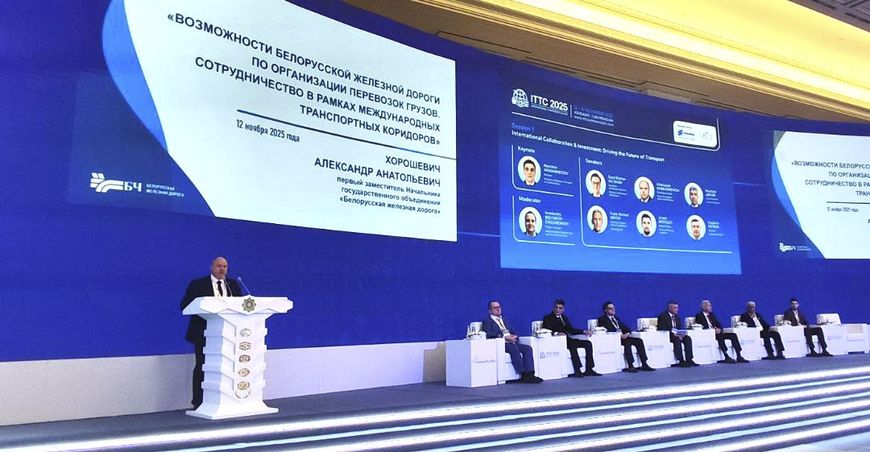
He emphasized the importance of further cooperation between Belarusian Railways and Turkmen Railways in joint projects by engaging the potential of two international transport corridors: East-West-East and North-South.
“Belarusian Railways is ready to offer its terminal infrastructure for organizing shipments along railway routes from Asia-Pacific countries toward the EU, as well as to ensure the unhindered passage of trains across Belarusian territory,” Aleksandr Khoroshevich said. He added that joint efforts with Turkmen Railways will help develop balanced solutions for new logistics routes and promising transport-transit corridors, thereby increasing freight flows to Asia-Pacific countries and, in return, to the EU and the EAEU.
During the visit, the Belarusian delegation held working meetings with Ambassador Extraordinary and Plenipotentiary of the Republic of Belarus to Turkmenistan Stanislav Chepurnoy, the deputy minister of railway transport of Turkmenistan; and Secretary General of the International Coordinating Council on Trans-Eurasian Transportation Mikhail Goncharov. The parties discussed promising areas for further cooperation.
Photo courtesy of Belarusian Railways

Belarusian President Aleksandr Lukashenko heard reports from Chairman of the State Border Committee Konstantin Molostov, Minister of Internal Affairs Ivan Kubrakov, and Minister of Foreign Affairs Maxim Ryzhenkov on 12 November, BelTA has learned.
Chairman of the State Border Committee Konstantin Molostov reported on the overall situation at the state border, with particular attention to developments on the Belarus-Lithuania border. He provided information on the operational environment, the actions of the border service in cooperation with other agencies, and the implementation of the president’s instructions.
The discussion also covered the development and improvement of the agency’s work in general, as well as areas requiring special attention amid current challenging conditions. These include strengthening border security through the renewal and modernization of infrastructure and technical equipment.
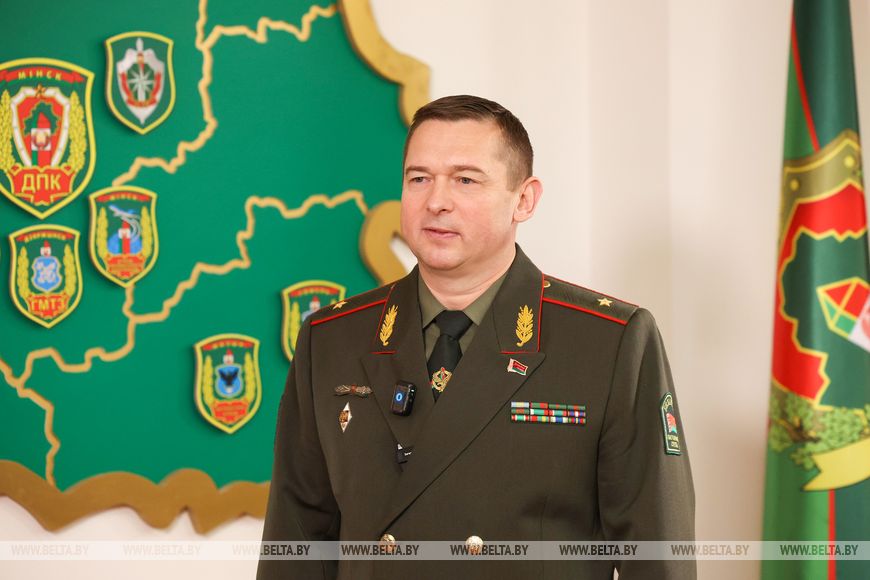
Minister of Internal Affairs Ivan Kubrakov briefed the head of state on the situation in the border areas, where more than 1,000 trucks had accumulated due to the closure of border checkpoints by Lithuania. Some of these trucks had been abandoned along the roadside. He also reported on the progress of earlier instructions to relocate vehicles to guarded parking lots. These instructions were currently being implemented. Measures taken by law enforcement agencies aim to ensure road safety. In accordance with the president’s instruction, drivers in difficult circumstances are receiving necessary assistance. Ivan Kubrakov also noted that the situation in border areas is under the control of the Internal Affairs Ministry, with enhanced public order protection in place.
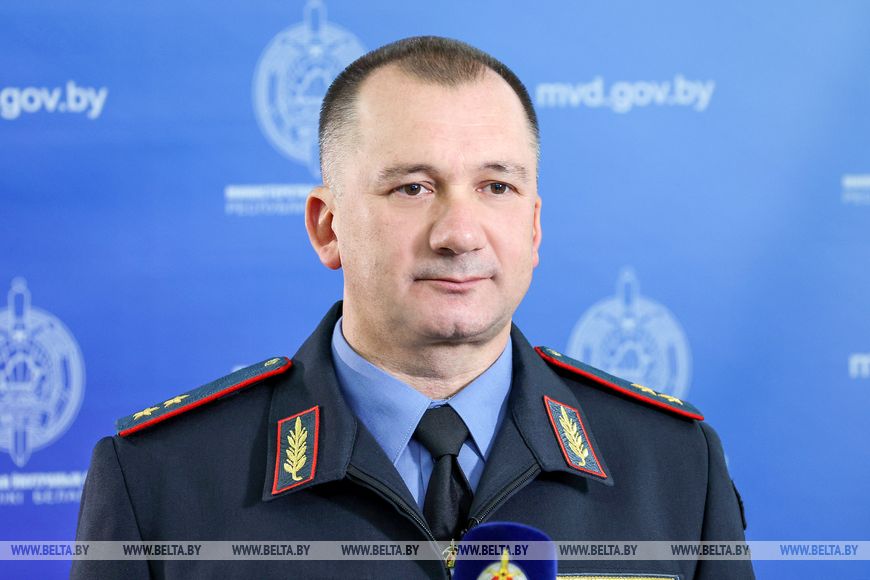
The main topic of today’s report by Foreign Affairs Minister Maxim Ryzhenkov to the president was the interaction with Lithuania, in particular, Belarus’ efforts to resolve the border crisis as soon as possible. The president gave the necessary instructions regarding further actions and the negotiating position of the Belarusian side aimed at restoring the normal functioning of border checkpoints.

Chairman of the State Border Committee of Belarus Konstantin Molostov has talked to reporters about the development and improvement of the border service taking into account the evolving situation, BelTA has learned.
Konstantin Molostov said: “The border service never stops getting better. We are seriously developing the system of deployment of forces and assets, reinforcing the most complicated sections of the border, including by means of setting up new units and border guard stations. The state investment program helps with that. At its expense we build new towns around border guard stations, new housing for the military personnel and their families. We are developing the system of engineering structures and barriers, the system for registering the passage of trespassers across the state border, and unmanned aviation.”
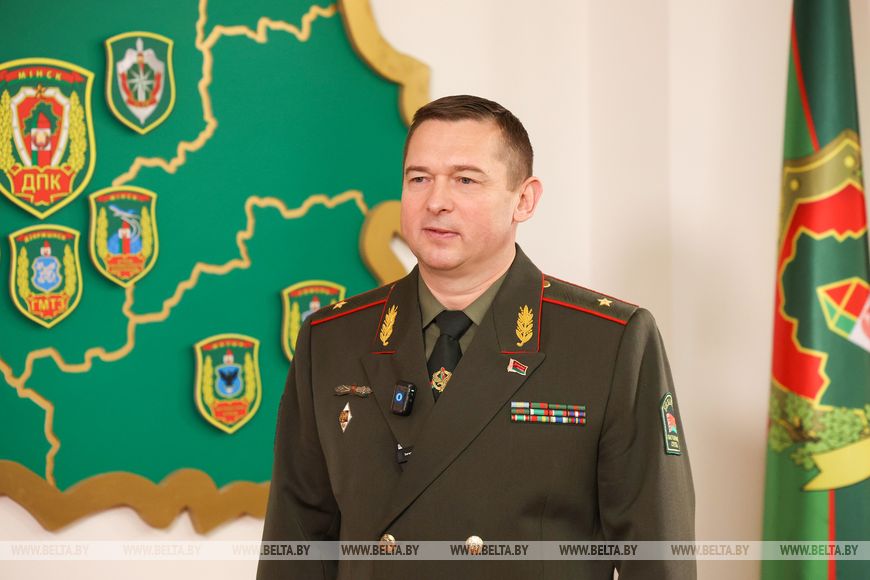
In his words, the border service gets new weapons, military hardware, and special hardware all the time. A lot of attention is paid to combat training. The chairman of the State Border Committee of Belarus pointed out that an educational border guard station had been recently commissioned at premises of the Border Service Institute. A center for training unmanned aerial vehicle specialists has been created.
“We pay a lot of attention to young Belarusians, to the development of military and patriotic clubs with a focus on the border service,” Konstantin Molostov stressed.

On 11 November, Belarusian President Aleksandr Lukashenko heard reports from Chairman of the State Border Committee General Konstantin Molostov, Minister of Foreign Affairs Maxim Ryzhenkov, and Chairman of the State Security Committee (KGB) General Ivan Tertel regarding the situation on the Belarus-Lithuania and Belarus-Poland borders, BelTA learned from the press service of the Belarusian leader.
“As it has become known, proposals from the Lithuanian authorities to resolve the situation at the Belarus-Lithuania border were received today. In this regard, the president heard reports from Chairman of the State Border Committee General Konstantin Molostov, Minister of Foreign Affairs Maxim Ryzhenkov, and Chairman of the KGB General Ivan Tertel regarding the situation on the Belarus-Lithuania and Belarus-Poland borders,” the press service noted.
Taking into account Lithuania’s proposals, the president instructed Maxim Ryzhenkov to organize negotiations to normalize the situation and restore the full functioning of border checkpoints, with the participation of Lithuanian officials responsible for this area.
Interagency coordination and additional support for the negotiations were assigned to State Secretary of the Security Council Aleksandr Volfovich.

Carriers are angry about the current situation at the border and drivers remaining in Lithuania may start blocking the roads, said Erlandas Mikėnas, the head of the Lithuanian Association of Road Carriers (LINAVA), Lithuanian media report.According to him, truck drivers are extremely angry, and a decision on blocking roads in Lithuania may be made at a congress on Wednesday, 12 November.
“This decision is not up to me. Tomorrow we will hold a general meeting of members, a congress. We can sense the mood among the carriers. There are proposals for road blockades and similar actions,” Erlandas Mikėnas said today. “We are trying to calm the waters and talk to people, but I cannot guarantee what decision the association's highest governing body will make tomorrow.”Earlier, LINAVA had called on the Lithuanian government to come up with a clear action plan and to take measures as soon as possible to facilitate the return of Lithuanian vehicles and ensure the safety of drivers. In a letter to Lithuanian Prime Minister Inga Ruginienė, LINAVA said that the current situation poses a serious threat to numerous jobs and the stability of the entire transport sector.According to the State Customs Committee of Belarus, the trucks stranded in Belarus will be relocated to designated parking areas near the Belarusian border checkpoints Kamenny Log, Benyakoni, Berestovitsa and Kotlovka. The statement noted that this decision was made by the Belarusian side to ensure safety on the approach roads to the border and the security of these vehicles. Lithuania-registered trucks will not be able to cross the border until the Lithuanian side restores normal traffic across the Medininkai and Šalčininkai border checkpoints. The Belarusian border service is monitoring the situation and stands ready to respond to any changes.The Belarusian Ministry of Foreign Affairs stated that truck drivers are given the opportunity to leave Belarusian territory and return to Lithuania, leaving their trucks at the aforementioned parking sites. Drivers who are unable to leave Belarusian territory for various reasons will be provided with the necessary assistance. On 29 October, the Lithuanian authorities closed the road border with Belarus for one month. Traffic through the Šalčininkai checkpoint (Benyakoni on the Belarusian side) was completely halted, while operations at the Medininkai (Kamenny Log) checkpoint were restricted, with only specific categories of travelers allowed to cross.

Belarus’ socio-economic development program for 2026-2030 must be comprehensive, effective, and realistic, Belarusian President Aleksandr Lukashenko said at a meeting to finalize the program, BelTA has learned.


