222357, Minsk, Svobody square, 2
Reception phone number: Operating mode:from 8.00 to 13.00 and from 14.00 to 17.00 on weekdays
e-mail: This email address is being protected from spambots. You need JavaScript enabled to view it.
hotline: +375 (1772) 5-55-72


On behalf of the Belarusian people and himself, Belarusian President Aleksandr Lukashenko has congratulated the people of the Republic of Cyprus on their national holiday, Independence Day, BelTA learned from the Belarusian leader’s press service.
“Belarusians and Cypriots have always honored and supported the principles of equality, trust, and respect. Our peoples have overcome much to defend the right to live independently on their own land,” the message reads.
The president noted that listening to and understanding each other are particularly important today. “Despite difficult times, our countries maintain vibrant cooperation in trade, economy, education, and sports,” he emphasized.
The head of state assured that Belarus is always happy to host Cypriot citizens under its visa-free policy, ensuring they enjoy a comfortable and safe stay in the country.
Aleksandr Lukashenko wished every Cypriot happiness, prosperity, and confidence in the future.

To advance interstate and military ties with Ethiopia, Belarusian Defense Minister Viktor Khrenin held a working meeting with Commander of the Ethiopian Air Force Yilma Merdasa Gnapa, with Belarusian Deputy Prime Minister Viktor Karankevich also part of the meeting, BelTA learned from the press service of the Belarusian Defense Ministry.
During the meeting, Viktor Khrenin noted that, according to the head of state, Ethiopia is one of the most important states in East Africa for Belarus and that Belarus wants to establish a mutually beneficial presence there. “This also applies to the military and military-technical cooperation. Therefore, we, the representatives of the armed forces of Belarus and Ethiopia, must clearly follow the lead of our heads of state. I am convinced that effective and fruitful cooperation in various areas and frequent engagement will allow us to successfully implement joint plans,” the Belarusian defense minister said.
Yilma Merdasa Gnapa expressed confidence in the deepening of bilateral relations.
The parties noted the similarity of Belarus’ and Ethiopia’s approaches to assessing the most pressing problems of international security and the friendly nature of bilateral relations at the highest level, which creates favorable conditions for building further interaction. In addition, the meeting outlined issues of bilateral military cooperation of mutual interest, with an emphasis on specific practical measures.

Following the speech by Tajikistan’s Prime Minister Kokhir Rasulzoda, the head of state said: “As I understand, Tajikistan is not yet ready to join the EAEU. Mikhail Vladimirovich [Russian Prime Minister Mikhail Mishustin], we need to somehow persuade our colleague.”
Currently, the Eurasian Economic Union comprises Belarus, Russia, Kyrgyzstan, Kazakhstan, and Armenia.

Minsk is set to host a meeting of the Eurasian Intergovernmental Council on 30 September, BelTA has learned.
The agenda for the Eurasian Intergovernmental Council meeting includes 19 items concerning financial support for industry and the agro-industrial complex, the development of an integrated information system, transport infrastructure, and a number of other issues.
The year 2025 marks Belarus' chairmanship in the Eurasian Economic Union's bodies. The priorities of the Belarusian chairmanship include: developing technological potential and cooperation, enhancing food security, completing the formation of a common transport space, leveling the conditions for economic activity, creating a transparent competitive environment, and protecting the internal market. Further priorities are intensifying collaboration in digital transformation, developing international cooperation, and transitioning to a new level of information interaction.

Possible schemes for supplying Ukraine with U.S. weapons can be undesirable. Belarus President Aleksandr Lukashenko made the relevant statement in an interview with reporters during a recent trip to Moscow. A new fragment of the interview has been aired by the TV channel Belarus One, BelTA has learned.
Aleksandr Lukashenko remarked that in foreign policy U.S. President Donald Trump occupies a very decent position and is intent on peaceful resolution of conflicts.
“What is he to do right now? He needs to act in this direction. And he will act. He has this rebellious, revolutionary power. This is why I support it. I would not like to see some schemes. For instance: I sell weapons to Europeans and they can ship them to Ukraine, they are free to do whatever they like. Listen, we are adults. You give it to Europeans. Europeans pay for it. Or maybe they don’t. You can simply give away weapons like Biden did. The weapons are delivered to Ukraine. Will you verify who paid anyone and how much? In other words, it is an old song and dance routine but in a different setting. The rest is the same,” the president stated.
“One should be more open if one has to speak in public. Or better yet one should not say anything in public until they come to terms. You have to come to terms and then talk about results. But Donald has this tactic. We understand it. We respect it. We agree with some of it and we don’t with some of it. And we will act depending on our understanding,” the Belarusian leader stressed.

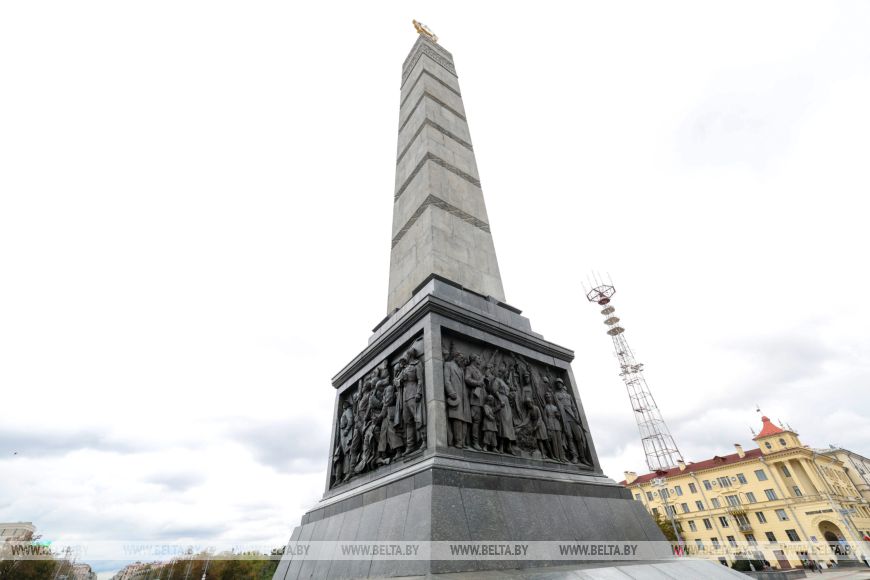
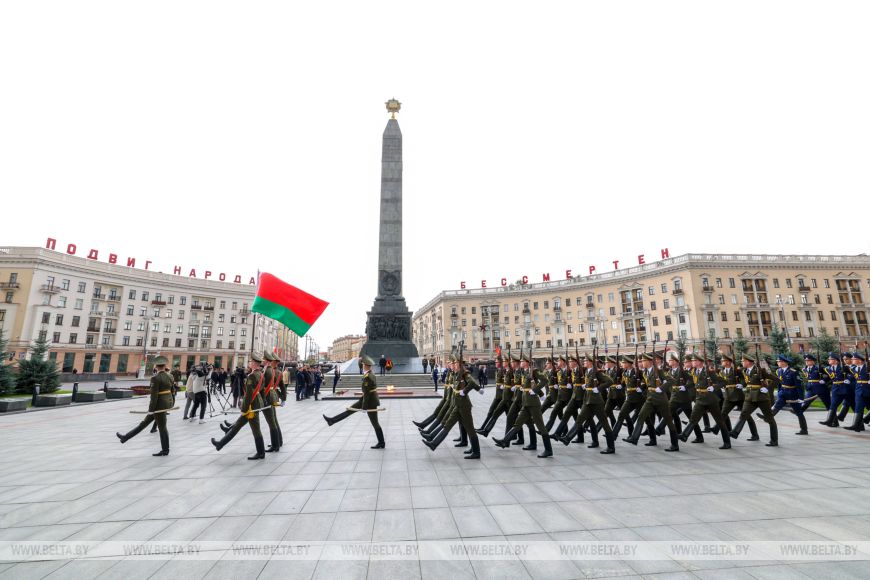
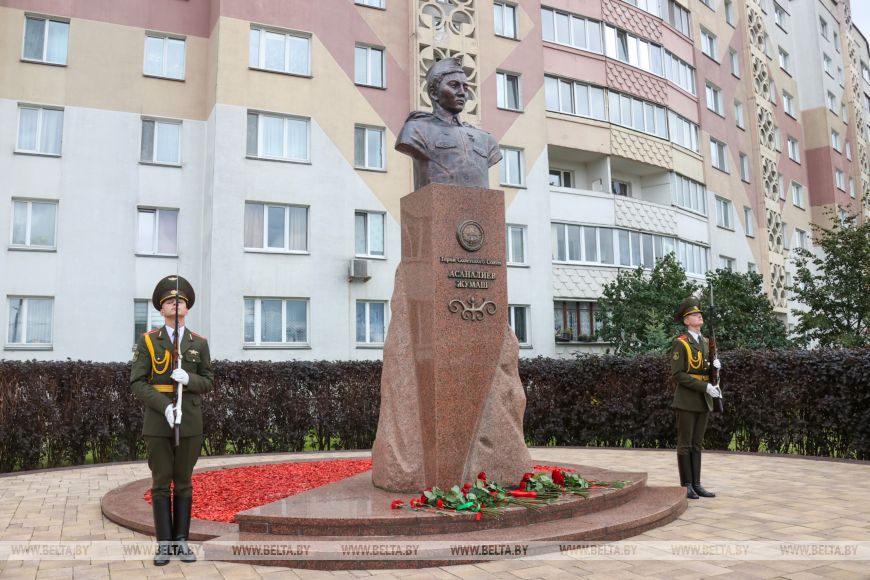
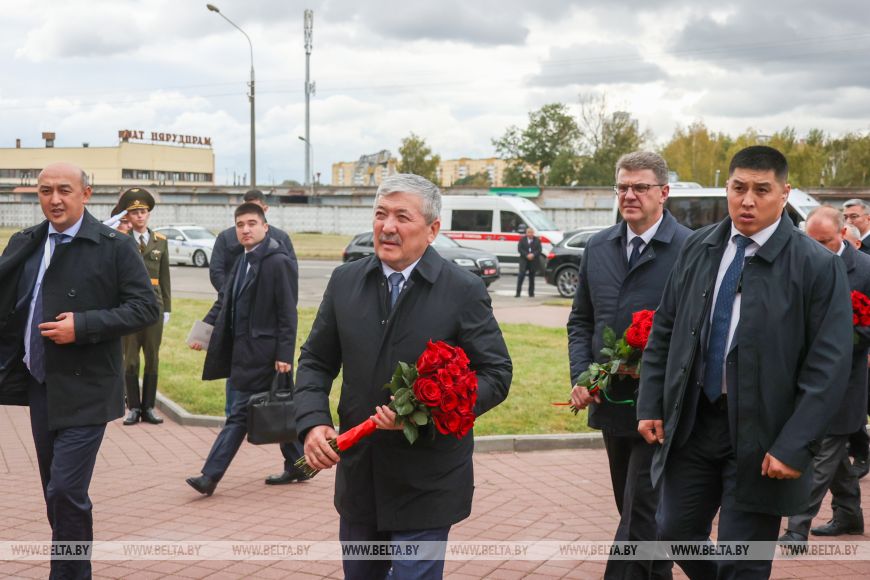
Chairman of the Cabinet of Ministers and Head of the Presidential Administration of the Kyrgyz Republic Adylbek Kasymaliev arrived in Belarus on an official visit on 28 September. Upon arriving in Minsk, he took part in a ceremony to lay wreaths and flowers at the Victory Monument and the monument to Hero of the Soviet Union Jumash Asanaliev.
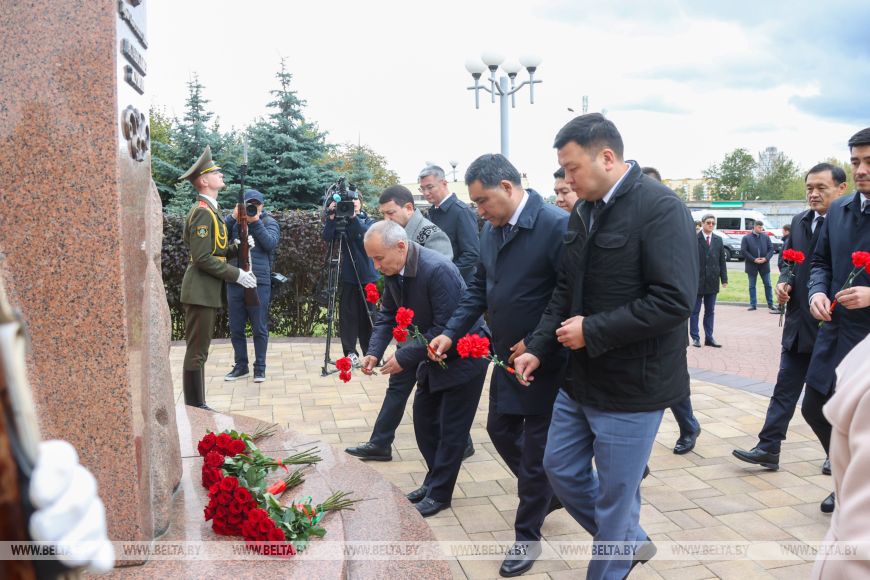
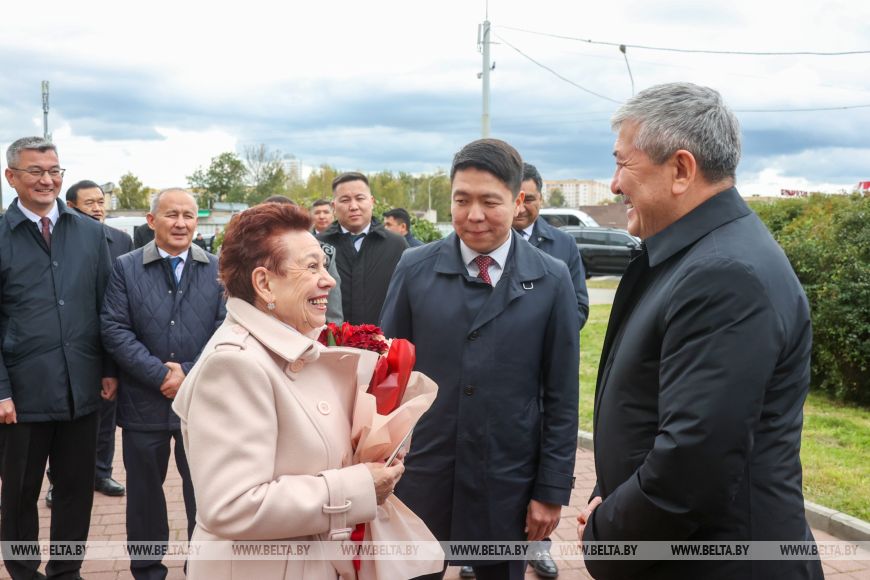
Photos courtesy of the press service of the Government of the Kyrgyz Republic, Vitaly Pivovarchik, Sergei Sheleg

Belarusian President Aleksandr Lukashenko, who is on a working trip to Russia, will hold a meeting with Russian President Vladimir Putin in the Kremlin today. The day before, the heads of state, together with other colleagues, took part in the World Atomic Week forum at the VDNKh exhibition center in Moscow, which was dedicated to the 80th anniversary of the Russian nuclear industry.
The second day of the visit is dedicated to the bilateral Belarusian-Russian agenda. The heads of state meet quite frequently in various formats. Their interactions can vary from informal communication, such as that on Valaam Island, to formal negotiations held either in the Kremlin or on the sidelines of international forums. Only one thing remains constant – not just an allied, but an exclusively friendly format of dialogue. Recently, the phrase that there are no unsolvable problems in the relations between Belarus and Russia has become common. Perhaps, also because Aleksandr Lukashenko and Vladimir Putin simply leave no chance for such problems to accumulate, as sometimes happened before.
The Kremlin talks announcement initially promised no particular surprises. “The heads of state will coordinate their positions on the most urgent matters of bilateral development, and exchange views on the regional situation and international agenda,” the press service of the Belarusian leader reported ahead of the visit.
In a brief comment to TASS, Press Secretary of the Belarusian President Natalya Eismont stated that the agenda includes the entire spectrum of regional and bilateral relations.
The heads of state are also expected to discuss security issues. For example, they might sum up the results of the recently concluded joint military exercise Zapad 2025 or discuss Vladimir Putin’s proposal regarding the future of the Strategic Arms Reduction Treaty (START). Aleksandr Lukashenko has already called this step a brilliant initiative.

The policy of the Polish leadership is based on the Jagiellonian concept, which implies expansion to the east and confrontation not only with Russia but also with Germany, Andrei Bogodel, Deputy Head of the Faculty of Education and Science – Head of the Education and Methodology Department of the Faculty of the General Staff of the Armed Forces at the Military Academy of Belarus, said in the latest episode of the V Teme [On Point] project on BelTA’s YouTube channel.
According to the expert, the policy of the Polish leadership is based on the Jagiellonian concept, which implies, among other things, expansion to the east and confrontation with Russia. “On one hand, this concept is aimed at pitting Poland against Russia, and on the other hand, against Germany. The essence of this idea is that Poland needs to regain the lands from Belarus and Russia that they allegedly should not have,” he emphasized.
Nevertheless, Andrei Bogodel believes that the militarization of Poland is directed not only against Belarus and Russia. They are also trying to use Poland as a counterbalance to Germany in order “not to let it get too strong.” “If we return to the Jagiellonian concept, the Poles realize that Russia certainly has no time for Poland right now. But Germany, which is growing significantly in strength and influence, has its own claims against Poland. We are hearing more and more talk there about the need to switch from a professional army to a conscript one,” the expert said.

Belarus President Aleksandr Lukashenko is taking part in the international forum World Atomic Week at premises of the VDNKh expo center in Moscow, BelTA has learned.
Together with other high-profile visitors before the plenary session began the head of state examined the exposition in the Atom pavilion. Director General of the Russian state corporation Rosatom Alexey Likhachev acted as the tour guide. He presented the pavilion itself and talked about capabilities of Russia’s nuclear industry.
Before participating in the forum in the territory of the Belarusian pavilion in the VDNKh expo center Aleksandr Lukashenko met with Ethiopian Prime Minister Abiy Ahmed Ali.
Taking part in the World Atomic Week are representatives of over 100 states, including countries of the Commonwealth of Independent States, Asia, Africa, and Latin America. The expo and the business program of the forum have brought together prominent nuclear industry professionals, scientists, representatives of government agencies, of international organizations, and of large companies.

The Embassy of the Republic of Belarus in the Republic of Korea hosted an annual cultural event, Belarusian Cuisine Day, organized in cooperation with members of the Belarusian diaspora, BelTA learned from the Belarusian Embassy in Seoul.
Attending the event were students from the Russian language department at Chungbuk National University, local cultural figures, civil society representatives, and members of the media.
Ambassador Extraordinary and Plenipotentiary of Belarus to the Republic of Korea Andrei Chernetsky addressed the guests with a welcoming speech. He emphasized the importance of preserving national traditions and values, spoke about Belarus’ rich culinary heritage, and highlighted the momentum in Belarus-Korea cooperation across various sectors.


