222357, Minsk, Svobody square, 2
Reception phone number: Operating mode:from 8.00 to 13.00 and from 14.00 to 17.00 on weekdays
e-mail: This email address is being protected from spambots. You need JavaScript enabled to view it.
hotline: +375 (1772) 5-55-72


Dancing is one of the fun activities to enjoy with friends on long winter evenings.
On 31 January the State Museum of the History of Belarusian Literature invited Belarusians of different ages and professions united by a love for music, dance, and Belarusian traditions for a dance evening. Experienced dancers helped those present get acquainted with the basic movements of various dances.
Accompanied by the violin, cimbalom, accordion, drum, and other instruments, the enthusiasts had fun dancing Lyavonikha, Krakoviak, Hrachaniki and Kakhanachka.

It is important to achieve efficient production, while maintaining a balance between actual productivity and wages, Belarusian President Aleksandr Lukashenko said as he visited Planar on 30 January, BelTA has learned.
The president assured that the state will continue to support advanced enterprises such as Planar. “We created this, invested money, and will continue to do so. But we see that in just two or three years you will easily pay back these funds and produce high value-added products with profit,” he said.
At such a level of development, enterprises are able to ensure strong financial and economic performance, decent working conditions and wages for employees, who, as he noted, are willing to work extra shifts and even on weekends. “I haven’t heard anyone at Planar complaining on TikTok that they’re being forced to work. That is great,” Aleksandr Lukashenko remarked. “But money is never enough. And for you too, probably. That’s good: it means you’ll strive to earn more.”

One phase of the snap inspection of the Armed Forces, conducted on the president’s order, has been completed, State Secretary of the Security Council of Belarus Aleksandr Volfovich told the media on 30 January, BelTA has learned.
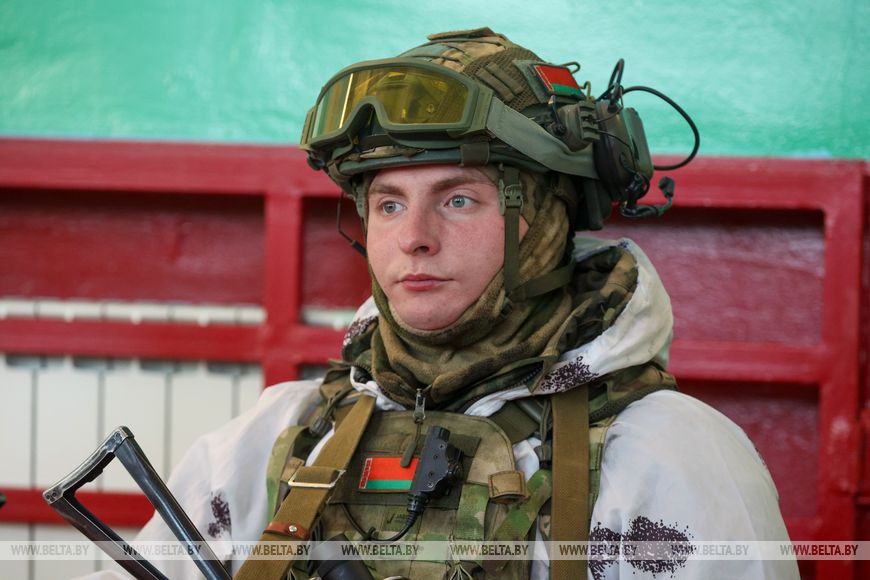
“Today, one phase of the snap inspection of the Armed Forces, conducted on the order of the president, has been completed. This stage included checking the combat readiness and combat capability of the 19th Separate Mechanized Brigade in fulfilling tasks according to its combat designation. The inspection took place under challenging weather conditions – severe frost, snow, and freezing rain. This affected the progress of completing the assigned tasks and control exercises. However, the brigade’s personnel successfully fulfilled the task set by the president. They worked through all the issues put forth for inspection: bringing to combat readiness, loading material resources, conducting a march over rough terrain, moving into an assembly area where control exercises in combat training subjects were conducted. The results the servicemen demonstrated are positive,” Aleksandr Volfovich said.
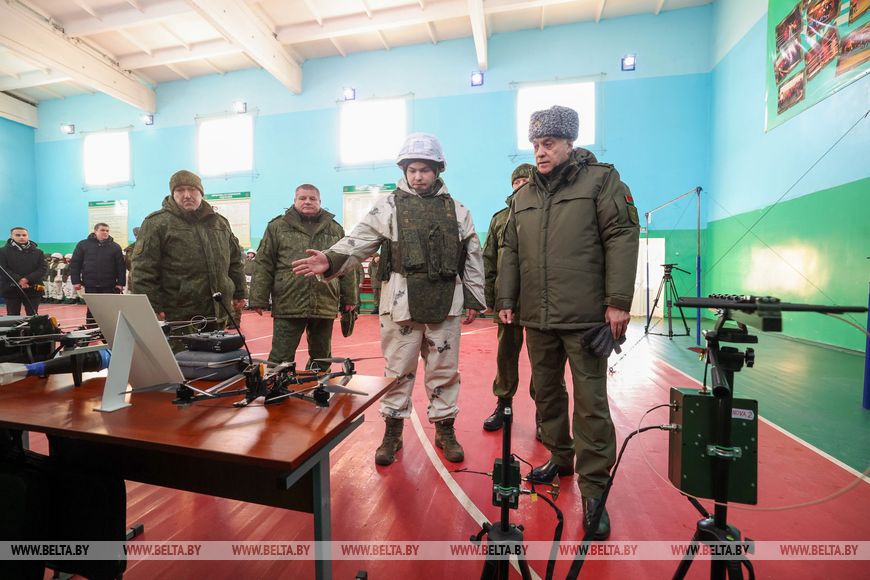
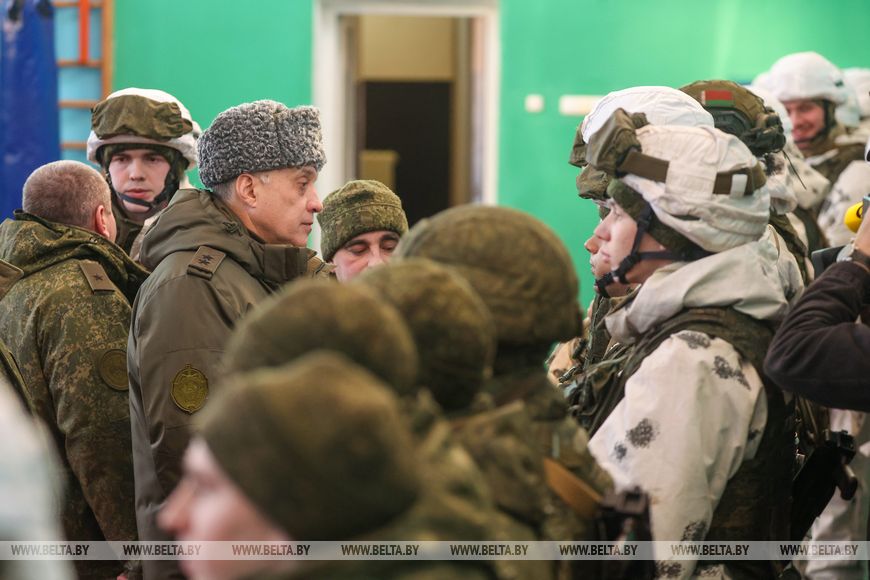
As BelTA previously reported, a large-scale inspection of the Armed Forces on the instructions of the head of state began on 16 January. Aleksandr Lukashenko is personally monitoring its progress. A new system has been implemented that allows the president to directly place military units on combat readiness, circumventing the Defense Ministry and the General Staff. The main aim of these inspections is to gain an objective assessment. This is precisely why they are carried out without prior notice.

Belarusian President Aleksandr Lukashenko received Agriculture and Food Minister Yuri Gorlov on 29 January, BelTA has learned.
“I have had to communicate with you often, especially this winter. It was not for nothing that I put pressure on the regions, the country, and you. Particularly concerning livestock wintering. The weather has tested us. Therefore, my first question is about the current situation in agriculture, specifically livestock preservation. What are the concerns? This is the most important issue. Which regions are performing well and which are not? And the key point: why are we failing in certain aspects?” the head of state said.
Aleksandr Lukashenko also asked about the implementation of earlier instructions to restore and organize the work of municipal-level entities, including agricultural service, agrochemical service, and construction units at the district level. “So that a chairman of the district executive committee (you worked as a chairman, you know what it is) can have a real instrument at his disposal: not just to sit in his office and give some orders. But to have a real means to influence situation and provide help and support. We have a number of districts that have already solved these tasks. And in spring, of course, we will go there and invite the relevant officials so that they understand how it should be done,” the president said.

Restrictions and bans on traveling to Belarus will have the opposite effect on Latvian citizens, and they will want to go to the country themselves to see how people actually live there, former Latvian MEP, media expert and journalist Andrey Mamykin told BelTA while commenting on the strict restrictions of the Latvian side for its citizens to travel on tourist buses.
The expert believes that the effect will be exactly the opposite of what the Latvian authorities expected. "Strangely enough, this will have the opposite effect, because the forbidden fruit is sweet. I remember being a young man: while the Voice of America was banned, I always listened to it on the sly, secretly from my communist grandfather. And when they allowed these things, chewing gum and Coca-Cola, I realized what nonsense it was. Very soon, the Balts will want to feel, see and get to know the Republic of Belarus firsthand. Naturally, they will leave with many positive impressions, because Belarus has those objective criteria and positive aspects that are missing in Latvia," Andrey Mamykin is convinced.
He added that another important aspect in our country is the administrative flexibility due to its compact size. "Belarus, being a small and compact country, has a high speed of maneuver. What I mean is this: when a foreigner comes to Belarus and applies for a residence permit, your authorities distinguish whether the person was convicted under a political article or a criminal one. Those who arrive with political convictions, in particular from Latvia, people who suffered for freedom of speech, receive asylum in Belarus," he explained.

On 28 January, Belarusian President Aleksandr Lukashenko received a report from State Secretary of Belarus’ Security Council Aleksandr Volfovich. The head of state is personally overseeing the progress of the large-scale surprise combat readiness inspection of the Armed Forces, BelTA learned from the press service of the Belarusian leader.
The president was given a detailed account of the specifics and interim results of the inspection, including how personnel and equipment are performing the assigned tasks, as well as the organization of supply and storage of material resources.
Aleksandr Lukashenko inquired about how the accommodations and daily lives of the personnel are arranged in difficult weather conditions, and whether the necessary uniforms are provided.
The head of state emphasized the importance of learning from modern military conflicts in relation to Belarus’ forested and marshy terrain.
The president set the necessary tasks for the further course of the inspection, which will continue until spring of this year. Upon its completion, a detailed analysis will be conducted to eliminate possible shortcomings and adjust efforts to improve the Armed Forces, as well as the training and preparation of personnel.

Belarus and China will step up cooperation in standardization on a bilateral level and within the Shanghai Cooperation Organization (SCO), BelTA learned from the press service of Belarus’ State Committee for Standardization.
The legal framework of Belarus-China cooperation in technical regulation comprises 13 documents, including an agreement on cooperation in the reproduction and dissemination of standards, an agreement on cooperation and a memorandum in standardization, metrology, conformity assessment and accreditation, as well as other agreements, including those at the level of national institutes in standardization and metrology.
Bilateral cooperation in these areas has intensified significantly over the past two years. In particular, on 31 August 2025, as part of the head of state’s visit to the People’s Republic of China, a memorandum of understanding between the State Committee for Standardization and China’s State Administration for Market Regulation (SAMR) on cooperation in ensuring measurement uniformity and a memorandum between the Belarusian State Institute of Metrology and the National Institute of Metrology of China on mutual understanding regarding cooperation in metrology were signed.
In addition, in 2025, specialists of the Belarusian State Institute of Metrology underwent a training internship at the National Institute of Metrology of China in Beijing, where they completed a training course and practical training in various areas. The participation of State Committee for Standardization representatives in the first conference on standardization cooperation of the Shanghai Cooperation Organization, held under the chairmanship of China in Qingdao in July, gave an additional impetus to the practical deepening of cooperation between the State Committee for Standardization and SAMR in standardization. The conference resulted in Belarus joining the Qingdao initiative to strengthen cooperation in standardization between the national standardization bodies of the SCO countries.
Cooperation continued with the State Committee for Standardization taking part in the China Quality Conference in Nanjing in September 2025. On the sidelines of the forum, Belarus and China signed an agreement on cooperation in standardization. The updated document makes it possible to develop cooperation mechanisms between member states and observers of the SCO in standardization, harmonize approaches to the development and application of standards, and create favorable conditions for the development of innovations and the exchange of best practices.
China’s current quality strategy is fully in line with Belarus’ approaches to the development of the quality of Belarusian products, Belarus’ State Committee for Standardization noted.
In 2026, work to improve the legal framework in technical regulation, which contributes to the further development of trade and economic cooperation, will continue both on a bilateral level and within the framework of the plan of joint actions of the national standardization bodies of the SCO member states. This plan, in particular, provides for the establishment of a meeting of heads of standardization bodies, the creation of a working group on cooperation in standardization and quality infrastructure in general, as well as thematic expert groups in key areas of cooperation, including metrology, accreditation, conformity assessment. Their work will make the development and application of standards even more effective and in demand.

It is important to reformat the investment cooperation with China, Belarusian President Aleksandr Lukashenko said at a meeting to discuss cooperation with China on 27 January, BelTA has learned.
“It is necessary to reformat the investment cooperation. Chinese foreign investments are setting records, especially in Belt and Road countries. Our government also reports growth (up by 2,5 times in January-September 2025 year-on-year, reaching $443 million). But the directive [on developing relations with China] set significantly more ambitious targets (no less than half a billion dollars annually, and no less than $150 million in direct investments for each region and the city of Minsk),” the president said. “When you see the figures for direct Chinese investments by region (Vitebsk - $1 million, Grodno - $100,000 over a five-year period), it immediately becomes clear who works hard and who doesn’t. I mean generally, not just in terms of cooperation with China."
“Have we done everything necessary to make Chinese investors flock to us via the Silk Road?” the head of state asked a question.
He noted that dozens of Chinese companies are registered in the Great Stone Industrial Park, and the park's new management, along with the government, must assist in expediting the launch and achieving the planned capacity for all declared projects.

Every year on 27 January the world commemorates the victims of the Holocaust and reaffirms its unwavering commitment to combating anti-Semitism, racism, and other forms of hatred. This date was officially established in 2005 by Resolution 60/7 of the United Nations General Assembly which was initiated by 104 member states of the organization, including the Republic of Belarus. It was precisely on 27 January 1945 that Soviet troops liberated the prisoners of the Nazi concentration camp Auschwitz-Birkenau. The exact number of victims is unknown, though various sources estimate it to be between 1.5 and 4 million people. In a conversation with BelTA, Igor Marzalyuk, a member of the House of Representatives, discussed how history has proven the fallacy of racial superiority theories and expressed concern that certain forces are attempting to justify the Nazis and their collaborators today.
Racist foundation of Nazi ideology
“Hitlerism arose from the basis of so-called racial nationalism. Why did this happen? In the 19th century, there was a rapid expansion of Western European powers into Africa, a significant part of Asia, and other regions, while in the United States of America, the indigenous population was being exterminated. All of this demanded ideological justification.We know Charles Darwin’s theory on the origin of species. This theory, which explains by scientific methods the origin of species and the struggle between them, contains an important postulate - the theory of natural selection. And so, the racists transferred the principles of Darwin's theory, in an entirely unscientific manner, from the biological world to the human world. They claimed that just as there are higher and lower species, more and less developed individuals among animals, so too is humanity divided into ‘races of slaves’ and ‘races of masters’,” Igor Marzalyuk noted.
This concept would later form the foundation of the doctrine of the Third Reich and the entirety of Nazi ideology. “For the Nazis, there was no equality of peoples, only a hierarchy of races. And by races, they did not mean those generally accepted in science. They believed the true Aryans – the Northern Europeans –were the superior race. There was a philosopher, Houston Stewart Chamberlain, who argued that it was the Germanic peoples who founded most states. Thus, there were two most advanced races: the Germanic (which included the English, Scandinavians, and Dutch) and the Mediterranean, represented by the French, Italians, and Spaniards. Those were the two dominant races, which were to be on top of all others,” the historian explained.
From the Nazi perspective, all Slavs without exception were considered a slave race. “We were viewed within this concept as subhumans, because they argued that all our cultural and technological advancements were imported from outside, primarily by the Germanic peoples. Consequently, we were destined to be subjugated and turned into a slave race, while the dominant position would be reserved exclusively for representatives of the superior race. Furthermore, there were so-called ‘racial parasites’ or, for the Nazis, non-races altogether. Jews and Roma were not races, but racial diseases for the Nazis. According to the Nazis’ plan, Jews were to be completely exterminated, without a trace. Not a single Jew had any chance of survival. Nazi ideology argued that the negative qualities inherent in Jews were incurable, and therefore, Jews could not be integrated or adapted into white European society,” concluded Igor Marzalyuk.

The combat readiness inspection in the Armed Forces will continue until spring, Belarusian President Aleksandr Lukashenko said at a meeting to discuss a project to set up an educational center for gifted youth offering training in the professions of the future in Minsk on 26 January, BelTA has learned.
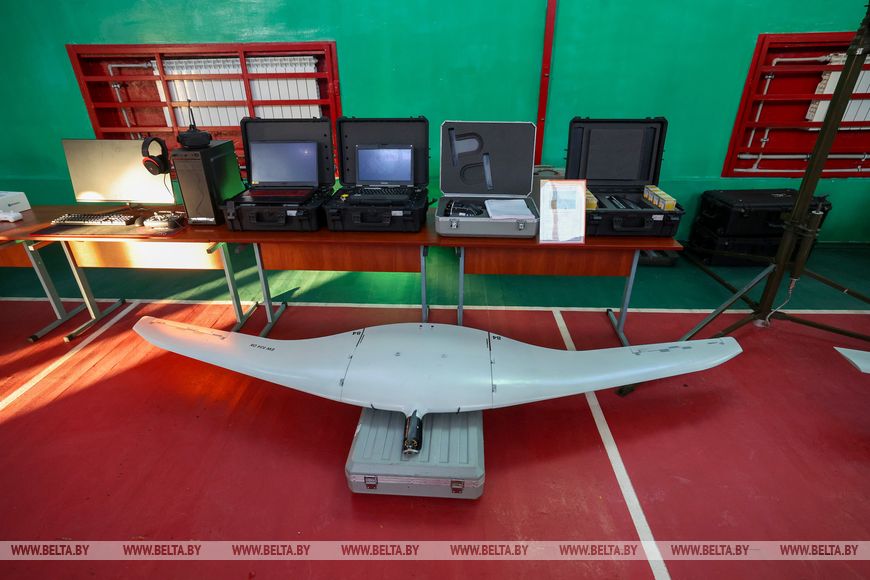
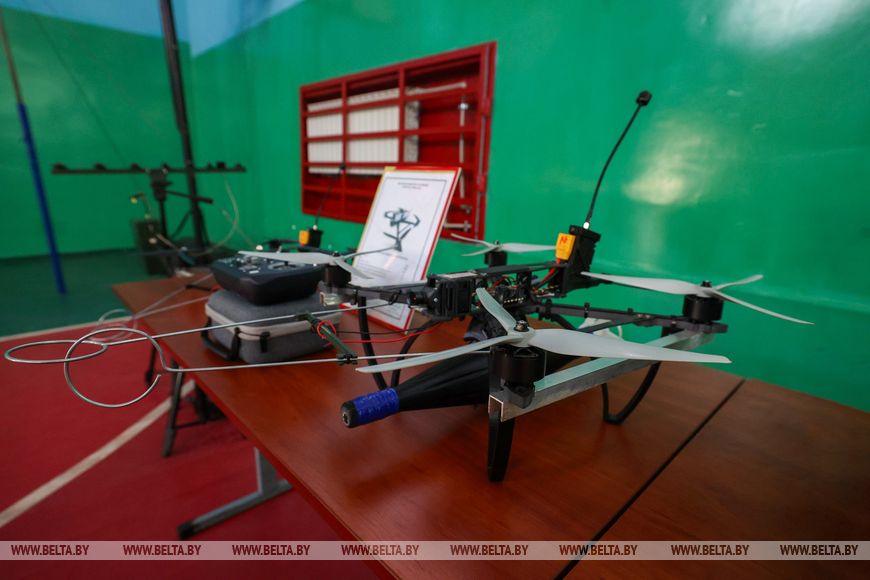
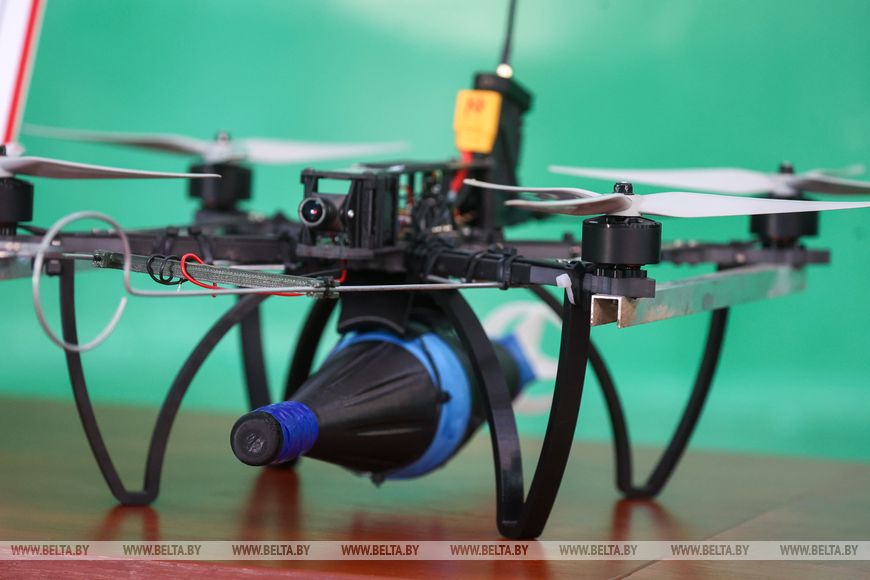
The head of state, speaking about technological development, noted that currently, people are simply going crazy over unmanned aerial vehicles: “Entire plants and factories are churning them out. And not only Ukrainians and Russians, who are using them for warfare today. Their use has proved quite effective.” 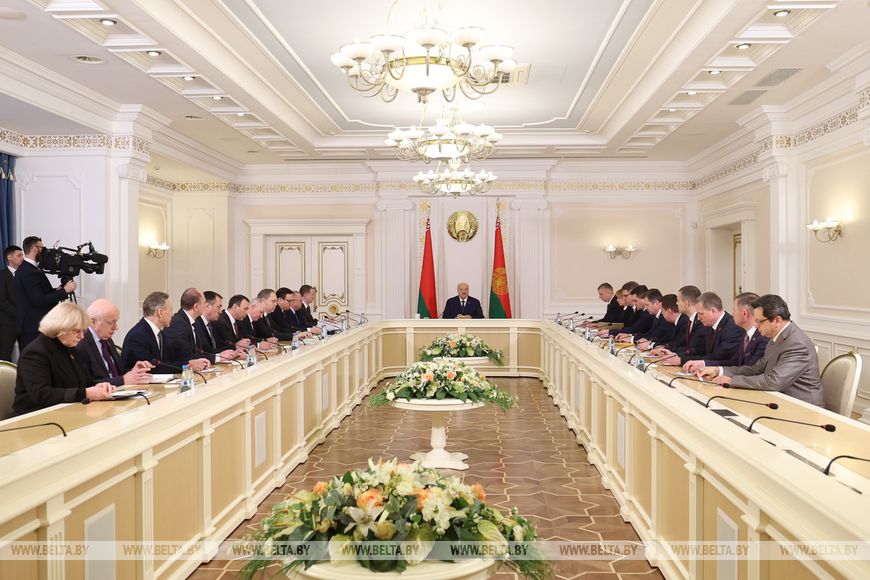
In this regard, the president recalled that the army readiness inspection is currently in progress: “It will continue under these serious conditions until spring.”


