


Belarusian President Aleksandr Lukashenko held a meeting to discuss the development of the Pripyat Polesie districts and the implementation of the corresponding program on 18 November, BelTA has learned.
"The agenda of our meeting was set long ago: the development of Polesie until 2030," the head of state said. "Let me remind you that this program is one of the president’s key election promises to the Poleshuks [the people of Polesie]. The election took place long ago. That does not mean we have done nothing there. A great deal has already been accomplished."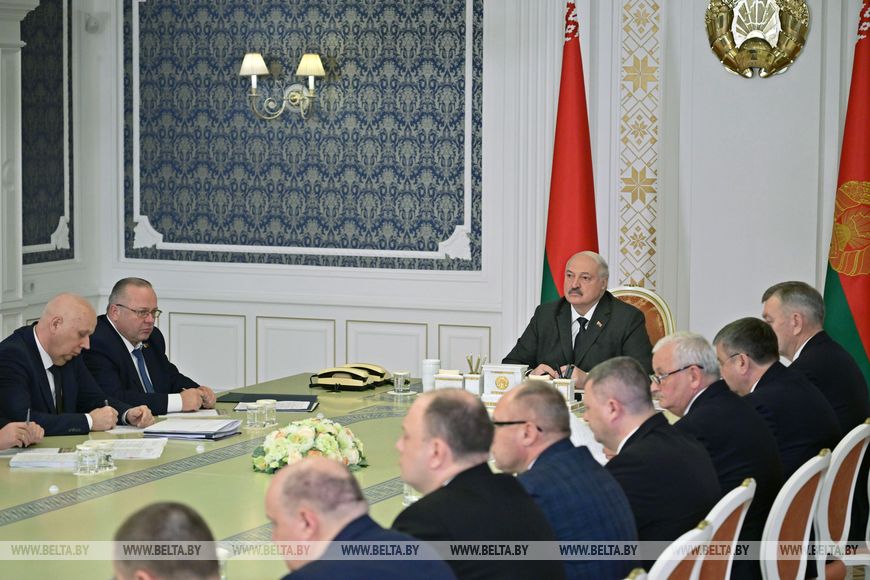
The president noted that he sees tangible results in Polesie this year. “But these are only small first steps. There is a huge amount of work ahead,” warned the Belarusian leader.The head of state said that he had recently inspected all districts of Polesie. He now has a comprehensive picture of how local residents cultivate and manage their land.The Polesie development program until 2030 covers nine districts with a population of 350,000."On the one hand, in implementing this program we must clearly identify and understand the measures to be carried out both within its framework and beyond, so that the Poleshuks, and indeed all of Belarus, can see that we are genuinely committed to its development. On the other hand, we must always keep in mind whether the financial resources are available to bring these measures to life," the Belarusian leader noted.
In this regard, he emphasized that reports should avoid "excessive Soviet-style approaches," cautioning against allocating funds without visible results. "What is needed are concrete measures and enterprises that will create new jobs, although that is not the foremost priority today, and ensure the long-term development of Polesie for centuries to come," Aleksandr Lukashenko stressed."Everything must be carefully calculated, verified, and most importantly, bring economic returns in the long run. Especially when it comes to budgetary funds. There is no extra money in the country," the president stressed. "The program’s measures must be concrete and follow a simple algorithm: we must define the goal, set specific tasks, and act to achieve results. I warned you about this. As I am informed, overall you have optimized them [the tasks]. Yet they remain insufficiently funded, and the financial gap is significant.”The head of state pointed out that about Br400 million is lacking, or 6% of the total funds allocated for the program (around Br6.5 billion). In this regard, the president asked for a clear answer to the key question: which financial sources will be used to implement the planned measures, and what specific initiatives those funds will support.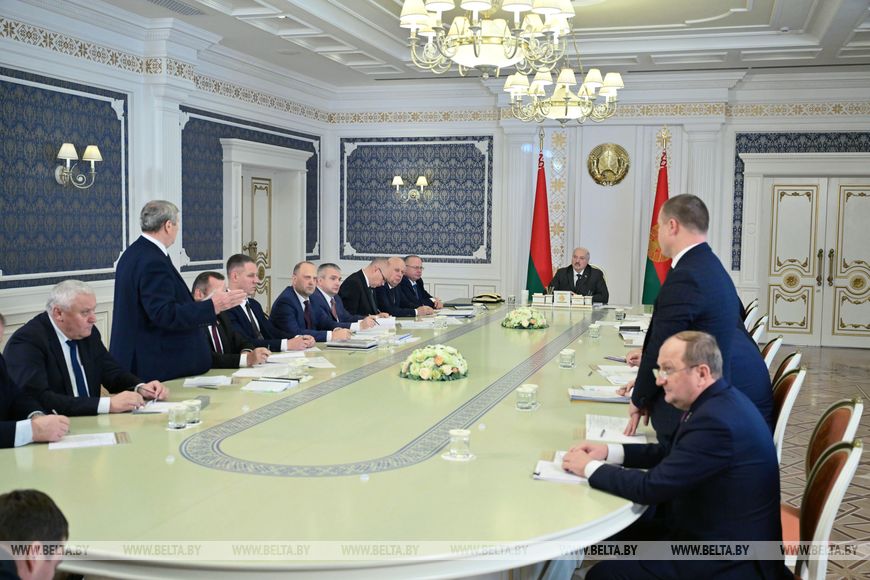
Aleksandr Lukashenko noted that oversight of the program’s implementation will be carried out by a true Polesuk Mikhail Rusy. He serves as aide to the president - inspector for Brest Oblast and Chairman of the Standing Commission on Legislation and State Building of the Council of the Republic of the National Assembly of the Republic of Belarus.He addressed several specific aspects of the Polesie development, one of which is the natural challenges that demand comprehensive, systemic solutions and, in some cases, major investment projects. Brest Oblast and Gomel Oblast today vividly demonstrate the effects of climate change. In this context, constant droughts, the shallowing of rivers, and the decline of reclamation canals, phenomena virtually unseen three or four decades ago, have become common references. “This is precisely that ‘Soviet-style approach’. We keep repeating in the old way: ‘The river is shallow, that is bad, this is bad…’” the head of state said.


