222357, Minsk, Svobody square, 2
Reception phone number: Operating mode:from 8.00 to 13.00 and from 14.00 to 17.00 on weekdays
e-mail: This email address is being protected from spambots. You need JavaScript enabled to view it.
hotline: +375 (1772) 5-55-72

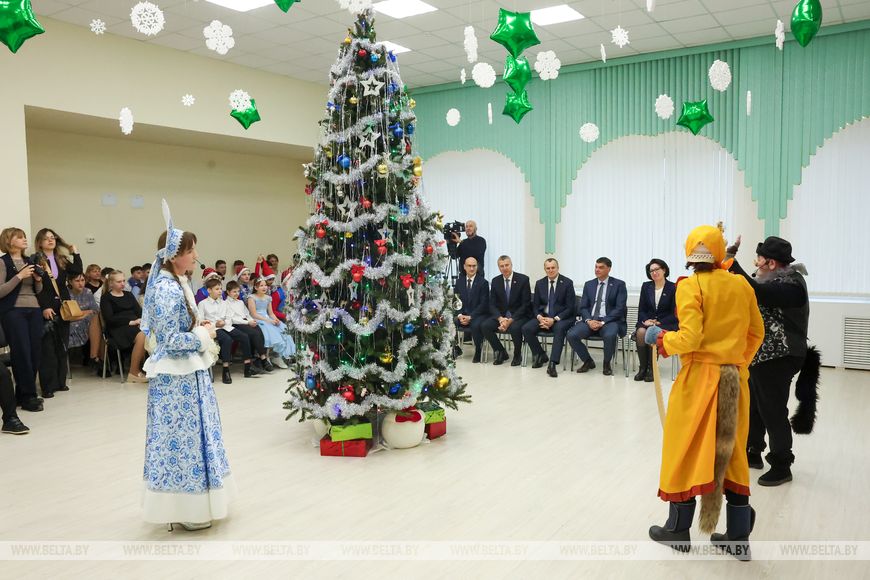
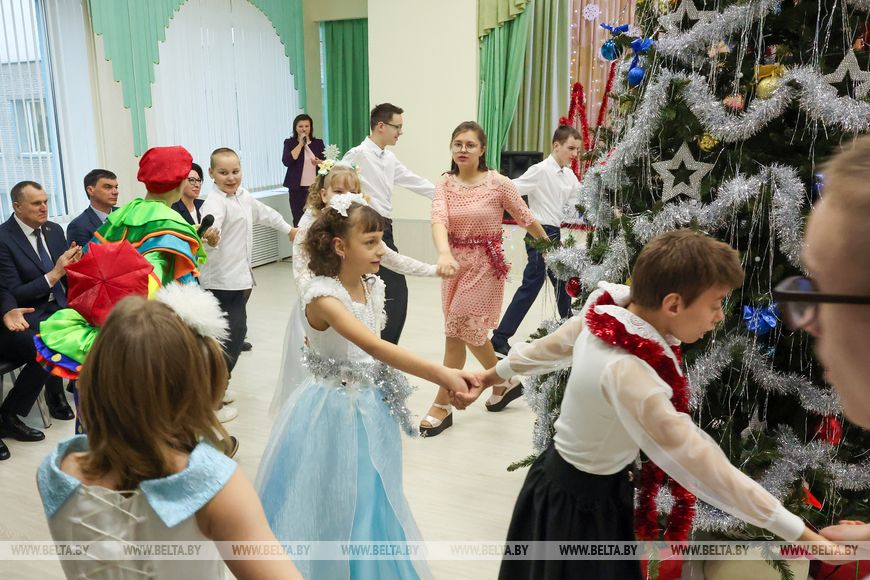
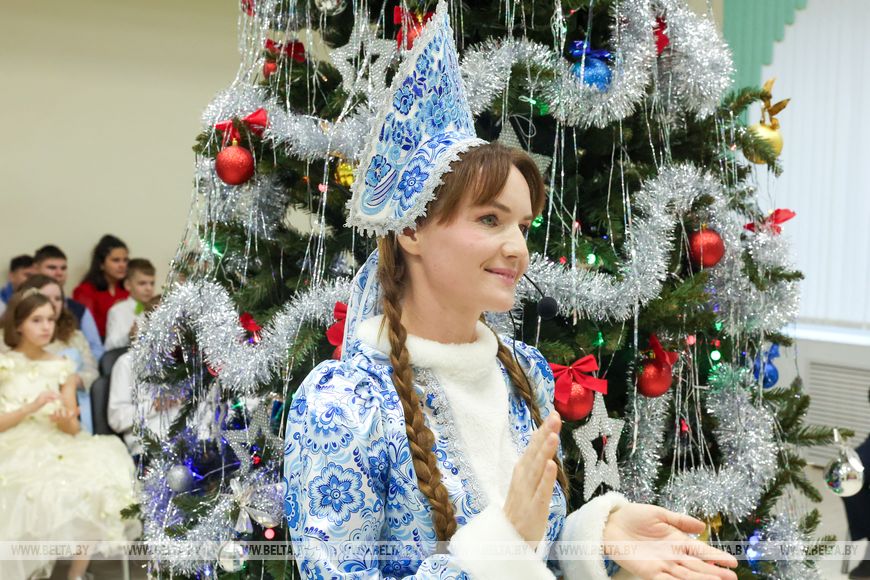
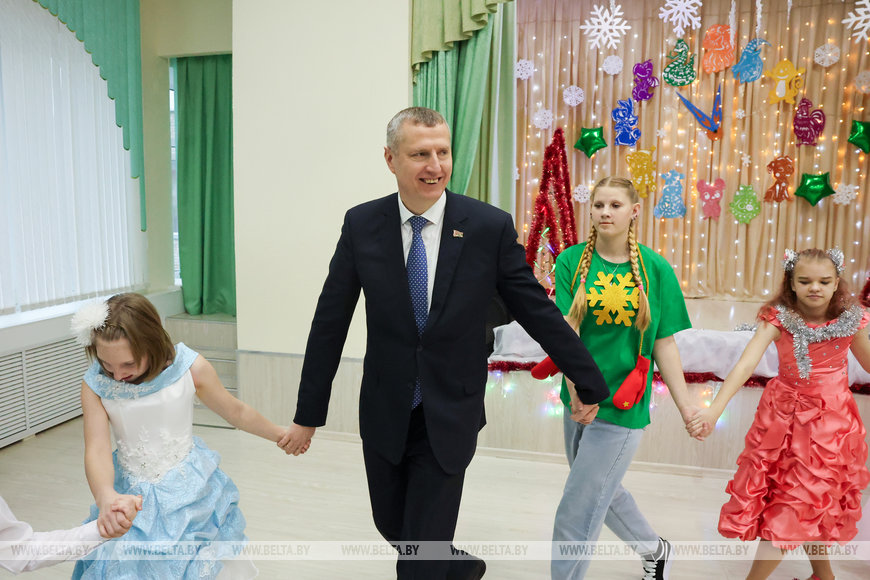
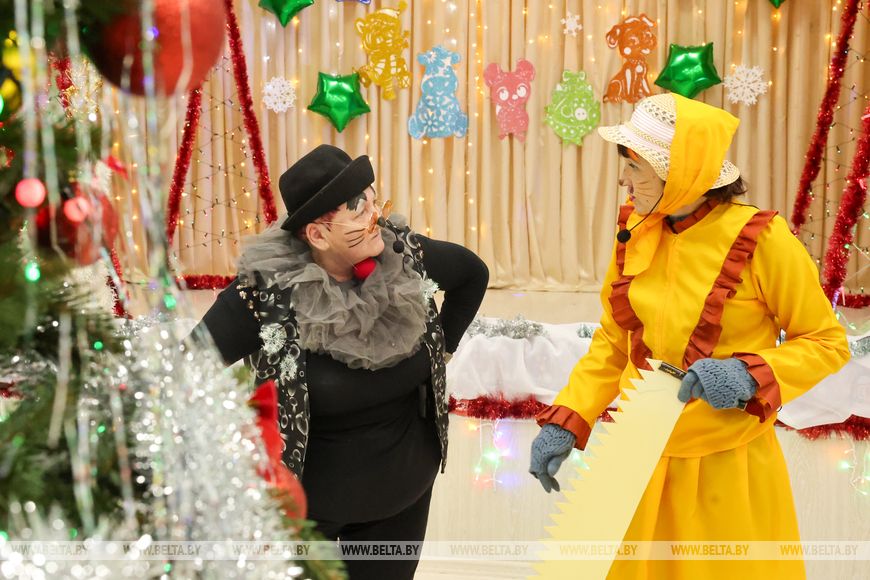
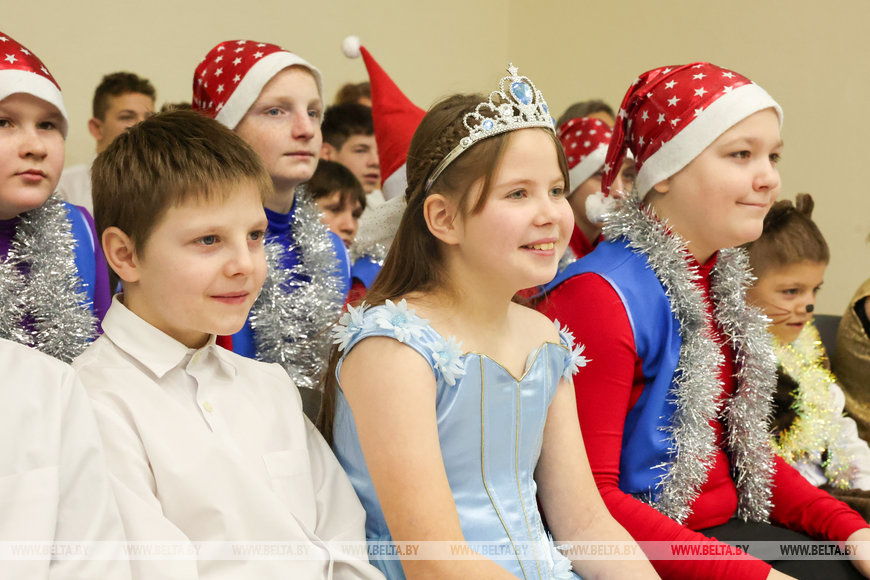
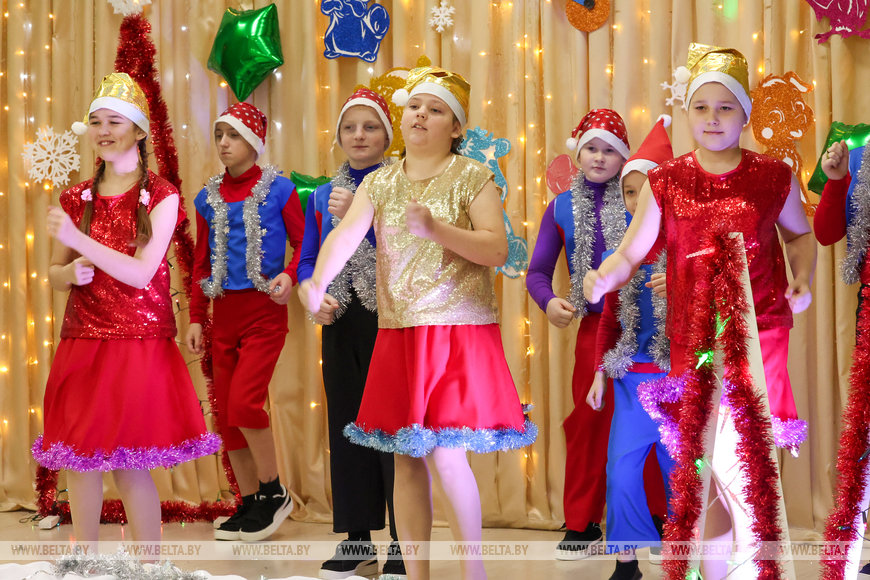
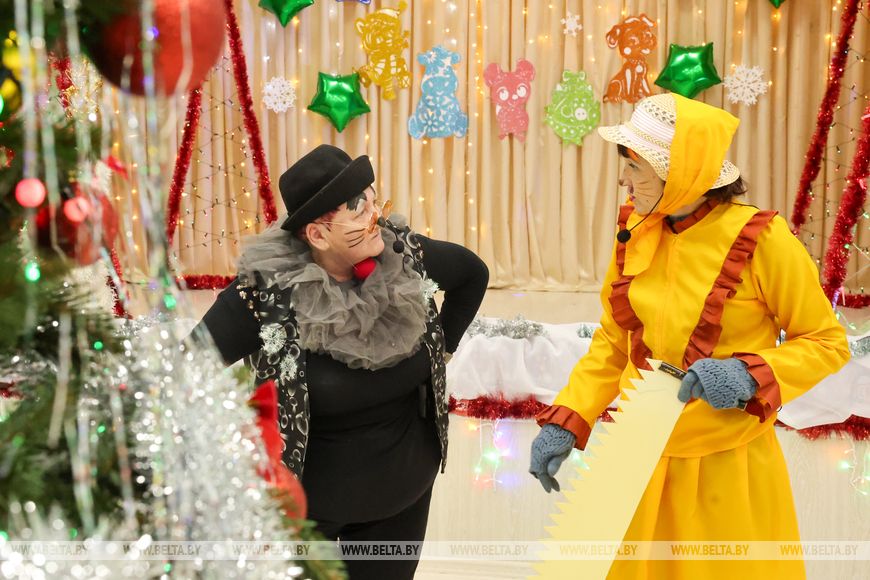
As part of the Our Children charity campaign, State Secretary of the Security Council of Belarus Aleksandr Volfovich visited the Volkovysk District Center for Special Education and Rehabilitation on 23 December, BelTA has learned.
Aleksandr Volfovich, together with staff from the State Secretariat of the Security Council, congratulated the children on the upcoming New Year and presented them with equipment for learning and rehabilitation, household appliances, and sweet treats.
“The New Year is perhaps the most anticipated holiday for children,” Aleksandr Volfovich told the media. “Remember how in childhood we would dance in circles around the Christmas tree and eagerly wait for Father Frost and the Snow Maiden to bring us gifts. Even as adults, on the eve of the New Year, many continue to believe in a miracle that is sure to happen. One only needs to believe in it very strongly.”
The state secretary of the Security Council pointed out that by participating annually in the Our Children campaign, he becomes increasingly convinced of how important it is not just for the children. “This noble cause is also necessary for you and me. After all, taking part in the campaign helps us become kinder, reminding us that somewhere there are people who need our support. If we can help them in any way, we certainly should,” Aleksandr Volfovich emphasized.
It is a unique format gaining momentum, Head of the Belarus President Administration Dmitry Krutoi described the Our Children campaign during his visit to the Belynichi residential school on 22 December, BelTA has learned.
Dmitry Krutoi highlighted the value of this tradition, saying that it’s truly wonderful that each year adults make time to attend holiday events children have eagerly been getting ready for. “The Our Children campaign is an absolutely unique format for our country. This year we mark its 30th anniversary. This project was initiated by our country’s president in 1995, and it was one of his first policy decisions,” said Dmitry Krutoi.
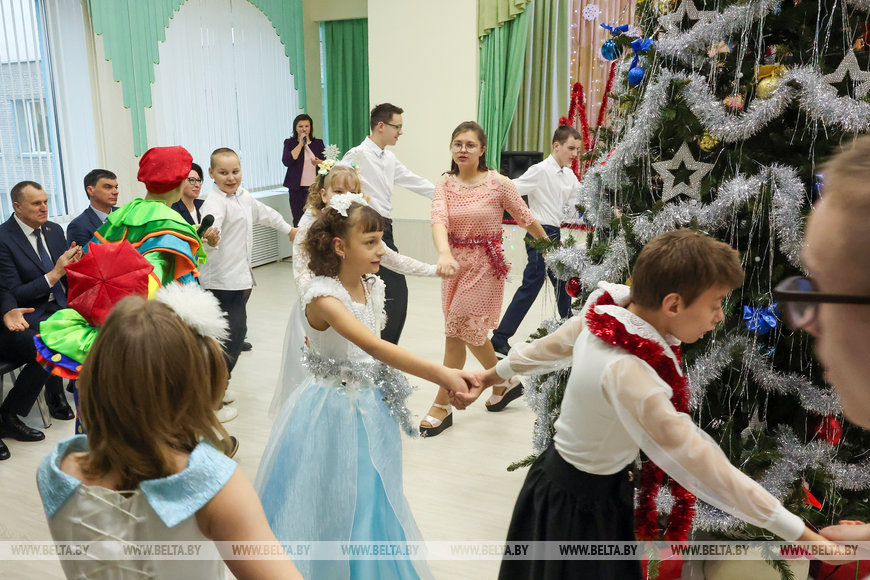
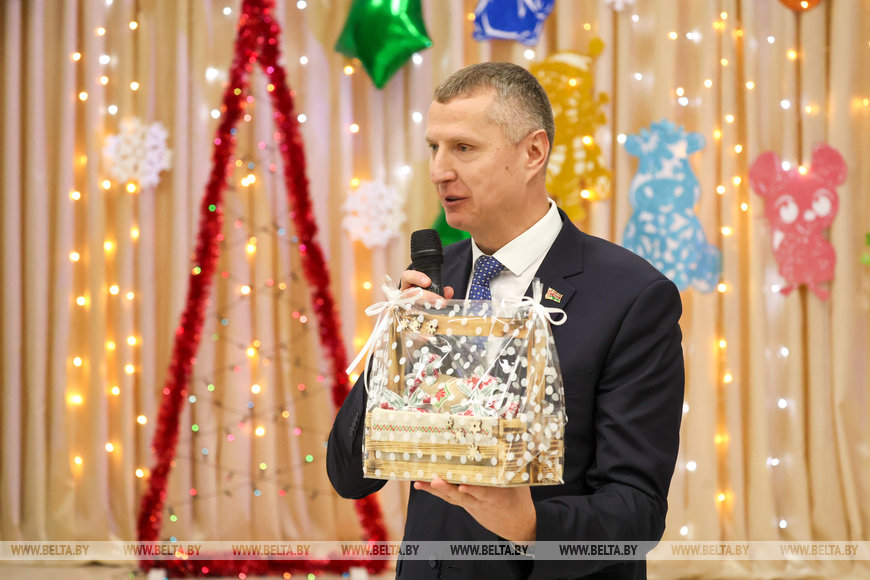
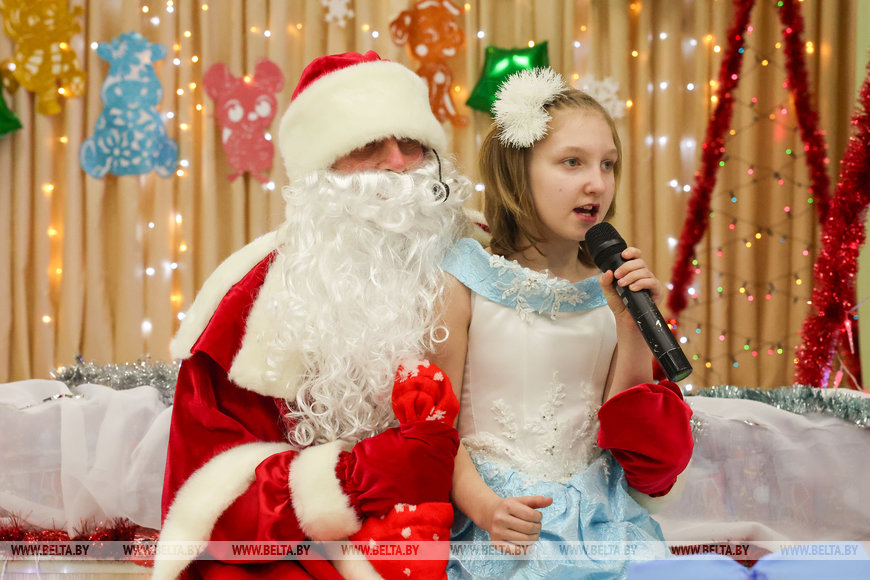
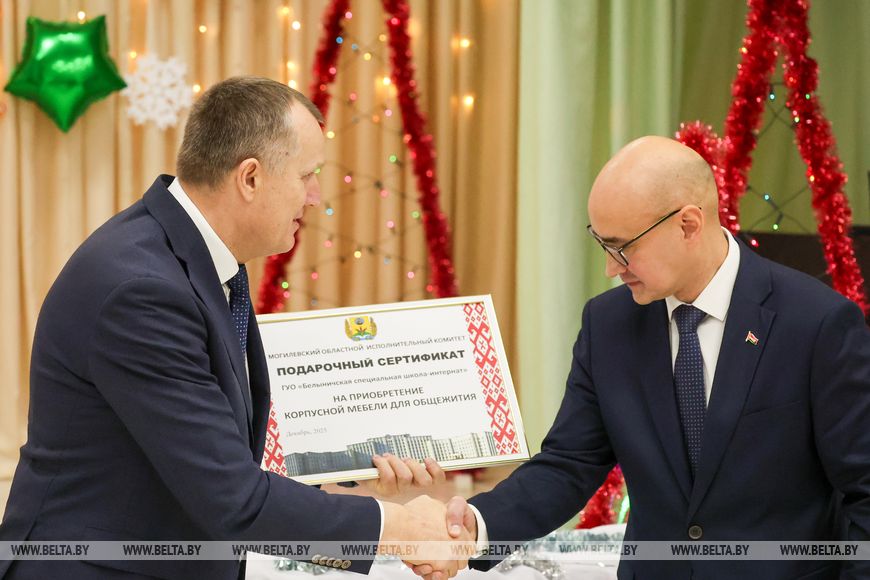
He also emphasized how fortunate it was that this particular decision concerned children. “A national plan was drafted to protect children’s rights and improve their conditions, which was a significant step during those challenging years. At that time, the main setting for children in need of state support was residential schools, which housed over 6,500 children. The president instructed that special attention be paid to this group of children at that very moment. Since then, this campaign has been gaining momentum, spreading across the country, and consistently involving more and more organizations that participate in the campaign, ensuring broad coverage for our kids,” Dmitry Krutoi stressed.
According to him, a serious transformation of the state support system for children in need of state protection has taken place over the past 30 years. Family-type homes have become the main form of child placement. “I believe that in time we will do everything to eliminate orphanages in our country entirely. Belarusians are warm-hearted and very kind people, and the adoption system works very well. The state provides such families with a good package of benefits, and we will do everything to ensure there is not a single child housed in a residential school or orphanage,” Dmitry Krutoi added.
According to the head of the Belarus President Administration, in his recent Address to the Belarusian people and Parliament, the president paid great attention to supporting families with children and to education. “If complaints are received in this area, our leader addresses them first. It is gratifying that there has been positive feedback from parents regarding school meals, which have significantly improved after the relevant meetings. The president responded very quickly to the criticisms raised. It is from such small details that a great state-level care for our children is built,” he emphasized.
Belarus’ Our Children campaign will involve more than 1 million children. These are children up to 15 years old. “The week leading up to the New Year should be spent so that every child feels this is the most magical holiday of the year,” Dmitry Krutoi said.
Andrei Shved, the former Prosecutor General of Belarus, has been elected Chairman of the Supreme Court of Belarus. The decision was made unanimously through an open vote at the 7th Belarusian People’s Congress on 19 December, BelTA has learned.
Belarusian President and Chairman of the Belarusian People’s Congress Aleksandr Lukashenko congratulated Andrei Shved on his new role, describing him as a decent man who has proven his merit. “What is remarkable is that not a single member of the security bloc, no matter how hard we pressed them or checked them, has said a single negative word about this man,” the head of state added.
The former head of the Supreme Court, Valentin Sukalo, has been relieved of his duties. The head of state expressed particular gratitude to him for his many years of service.
“Valentin Olegovich, you are a man of honor. My only wish is that the new appointee will draw on the best of your experience. We will speak again, as I would ask you not to distance yourself from our Supreme Court until the transition is complete. And even then, we will still be interested in your perspective. You are not only a practitioner but also a good theorist,” Aleksandr Lukashenko emphasized.
The national social and economic development program must place a strong emphasis on the youth, a delegate of the 7th Belarusian People’s Congress, a member of the House of Representatives of the National Assembly of Belarus Marina Lenchevskaya said on the air of the Belarus 1 TV channel, BelTA has learned.
Commenting on the significance of the five-year national development plan, which is to be adopted at the Belarusian People’s Congress for the first time, Marina Lenchevskaya noted that having a long-term perspective is a good thing.
“We also had five-year development plans during the Soviet times, and it yielded positive results. We set a goal, map out clear indicators, and then steadily progress towards it. In modern independent Belarus, we also follow five-year plans, but I would like to emphasize that the program we are approving today for five years adds more layers to the foundation of our state. Overall, this program is not just for five years, it is a long-term strategy,” the delegate said.
Marina Lenchevskaya emphasized that the goal of this program is comprehensive and it stems from the need to build a self-sufficient, competitive state with a human-centered approach. “We must do everything for the people. By the way, the priorities stated in the program today fully correlate to this concept. For example, demographic security is a very necessary thing for us. It is important to support the family, that there are more Belarusians, but it is also very important that our Belarusians understand that this problem is solved not only through state financial support, but that it is also a worldview issue. Belarusians must understand, especially the younger generation, that our numbers should grow. Only then will Belarus live and have a future. Another thing I really like in this program is the youth topic. The youth of today are the contemporary face of our society. They challenge stereotypes and drive new trends. Young people dream a lot, their dreams turn into projects, and they are ready to implement these projects. We must make the youth our priority. It is very important that the program sets a target: 15% of managerial positions must be held by young people. We should not shy away from giving them leadership opportunities. However, young people themselves should realize that reaching senior roles requires climbing the career ladder step by step, starting from the bottom. Therefore, I think that the youth has a great future, and it is wonderful that in the social and economic development program we are making a bet on the development of youth policy,” Marina Lenchevskaya said.
The new away stretch for HC Dinamo Minsk in the regular championship of the 2025/26 Kontinental Hockey League (KHL) began on a losing note, BelTA has learned.
Returning to action after a two-week hiatus, the Minsk Bisons traveled to Yaroslavl to take on the reigning KHL champion Lokomotiv. The guests were chasing the game from the third minute onward. A penalty for putting the puck over the glass by Kristian Khenkel proved costly, as HC Lokomotiv Yaroslavl scored on the resulting man advantage in a mere 15 seconds. The home side added another midway through the period, but Xavier Ouellet gave Minsk a lifeline with a goal late in the first to make it 1-2.
After a goalless middle frame, the Minsk Bisons struck back at the beginning of the third with Alex Limoges’ power-play goal to make it 2-2. With the score still level after 60 minutes and overtime, the contest was settled from the penalty spot, with the Yaroslavl side showing better composure. As a result, HC Dinamo Minsk lost 2-3. The score mirrored their previous encounter on 29 September. The outcome, however, was reversed: in the first game, it was the Minsk Bisons who held their nerve in the shootout.
The defeat snapped the five-game winning streak of HC Dinamo Minsk. The team remains in third place in the Western Conference standings with 48 points. The second and final match of the away series for Dmitri Kvartalnov’s squad will be in Yekaterinburg on 18 December, with the game against HC Avtomobilist Yekaterinburg scheduled for 5 p.m. Minsk time.
In The Honest Story project on BelTA’s YouTube channel, refugee from Latvia Roman Samul reflected on why the Belarusian political system is better than Latvia’s.
When asked about living in a so-called “dictatorship” after his relocation, Roman Samul responded: “I am not yet (and this is important) a citizen of Belarus. Speaking as someone from the outside, I am entirely satisfied with the situation here.”
“We are ordinary people; we do not fully grasp why certain things are being done or what their consequences will be. We all live in the present. It is the role of politicians to think about the future and the well-being of the citizens of the country,” he explained. “I understand much of what the Belarusian government is striving for. I am quite content with that. I appreciate your attention to your historical legacy, i.e. what happened and what could happen if we forget about it. This is very important.”
Comparing political systems, Roman Samul noted that in Latvia, the president is not directly elected by the people: “In Latvia, the president is chosen by a closed assembly of party officials. They deliberate privately, reach a decision within a day or two, and we, the public, learn who has become our new head of state the following morning.”
“Take Vaira Vīķe-Freiberga, who initiated the intense wave of Russophobia in Latvia. She actually arrived from Canada. She had no idea of what was happening in Latvia. She is an ethnic Latvian whose parents fled in 1944–1945, and we understand her background. That entire aggressive political era began with her,” he added.
In contrast, he emphasized that in Belarus, “the president is elected by all people. You can freely go and vote for your chosen candidate.”
Roman Samul continued: “What I value here is that people elect their representatives, and those representatives truly work for the people’s interests. Whatever promises are made, they are expected to fulfill them during their term and work toward those goals. There is a genuine effort to improve things through new legislation.”
“If you look at politics in Latvia, it is frankly a disgrace. When bills reach the Saeima (the parliament of Latvia), these documents are in English and are sent off for translation. They are some 18 pages long. They are distributed just half an hour before being voted on, whether to pass or reject them. It is an absolute rigmarole because the legal language is complex and a lot of things are deliberately obscured. Most members of parliament have only a secondary education; maybe one or two hold a law degree. How can they possibly understand what this bill is about, whom it serves, and whether or not it harms the people who elected them? They vote unanimously based on the party leader’s instruction. And typically, any bill handed down from Brussels is passed without question,” he stated.
“Your political system functions effectively. In Latvia, if you want to achieve something, you can write inquiries, requests, and proposals to any member of parliament. By law, they are obliged to reply within, say, 15 business days. But in reality, you receive meaningless replies. They don’t even read your letter, they simply pass it to a secretary with instructions to ‘send a response,’” Roman Samul noted.
By way of comparison, he shared an experience from Belarus. A friend of his who had moved to Belarus could have been returned to Latvia, which she didn’t want, as it was not safe for her there.
“She contacted the relevant authorities, and the issue was resolved. The migration department even convened an inter-ministerial meeting to hear directly from migrants about the challenges they face. Here, authorities listen to you,” said Roman.
He observed that much has changed in recent years to ease the transition for those moving to Belarus from abroad. “When a migrant from Latvia relocates, they often cannot get their diploma recognized because there are no diplomatic relations with Latvia. Belarusian authorities send inquiries, and Latvia simply ignores them. It was decided that either references and work experience could be accepted as proof of qualification, or examinations would be conducted here to validate the diploma. This is now accepted,” Roman Samul explained. “If someone has no family ties or money to buy property, they can come here, get a job at a state enterprise or collective farm, sign a five-year contract, and their employer can immediately apply for a residence permit on their behalf. That’s beyond amazing. In what other country would you be taken care of like that?”
“And that is what’s truly compelling, actually. The very attitude that ordinary people are treated with respect here and that they are heard,” concluded Roman Samul.
The second session of the 7th Belarusian People’s Congress will take place in Minsk this week, on 18-19 December. Preparations for this large-scale forum have been long and thorough. It was initially expected to be held in the spring; however, there is no need for haste in such matters, as treating such events, and this is one of the most important political events in the life of our country, as a mere formality is a path to nowhere. The Belarusian People’s Congress is set to approve the program for the country’s social and economic development for the next five-year period. Belarusian head of state Aleksandr Lukashenko will address the Belarusian people and parliament. Furthermore, delegates will need to resolve a number of personnel matters. What is known about the upcoming session, how do the authorities view the immediate future of the country, and what danger did the president warn about? We have gathered the key points about the event in this article.

The history of the Belarusian People’s Congress
The Belarusian People’s Congress needs no introduction. However, it was only a couple of years ago, in February 2022, that it received constitutional status, transforming from just a platform for brainstorming and discussing prospects into the highest representative body of people’s power in Belarus. Decisions of the Belarusian People’s Congress are now mandatory for implementation and can override legal acts of state bodies and officials if they contradict national security interests, with the exception, of course, of acts by judicial bodies.
The first Belarusian People’s Congress was held in 1996. It was a time of economic chaos and political conflict. Life demanded urgent decisions, and at that time, only the people had the right to decide their own fate, as Aleksandr Lukashenko stated.
However, there is an opinion that the history of the Belarusian People’s Congress began long before that. Historian Igor Marzalyuk recalled the ancient Belarusian veche, our age-old tradition of popular governance.
“The veche was a popular assembly, though participation was not universal. Initially, only adult married men with full legal capacity, who defended their country when necessary, meaning they bore arms, and owned property could participate. It’s important to understand that these were primarily heads of households. Later, representatives of the most important and significant clans took part. But the most crucial aspect was that this veche represented all strata, all groups of the free population (in this case, of the Polotsk land),” he explained.
Who becomes a delegate to the Belarusian People’s Congress
According to the law, the maximum number of delegates to the Belarusian People’s Congress is 1,200. These individuals are primarily representatives from all branches of government, local Councils of Deputies, and civil society, i.e. various social strata and groups within the country.


In this structure, representatives from the legislative, executive, and judicial branches of power, as well as deputies of the Minsk City Council of Deputies, are delegates to the Belarusian People’s Congress by virtue of their positions. Representatives from other local Councils of Deputies, as well as from civil society, are elected in the manner prescribed by law.
You can read about the individuals of the Belarusian People’s Congress, the ordinary people, in our dedicated section of the same name. We considered it important to introduce you to those who represent our country’s interests, to share their values, views, and what motivates the people involved in shaping Belarus’ future.
What was discussed at the first session of the 7th Belarusian People’s Congress
The first session of the 7th Belarusian People’s Congress was held in April 2024. Notably, this forum was conducted for the first time in its new status as a constitutional body, which determines the strategic directions for the development of society and the state and ensures the inviolability of the constitutional order, the continuity of generations, and civic accord.
Participants of the international conference “Modern economic challenges and their impact on labor relations, the socio-economic situation of workers,” held in Minsk on 11 December, issued a statement on the negative impact of sanctions, BelTA learned from the press service of the Federation of Trade Unions of Belarus.
As previously reported, trade union representatives from 27 countries attended the forum. The conference discussed the impact of unilateral coercive measures on workers’ rights, sustainable development of countries and global security, the decreased level of worker protection amid economic digitalization and the rapid expansion of non-standard forms of employment, as well as the need for consolidated efforts by the global trade union movement to protect workers’ interests under these circumstances. The outcome of the discussions was a statement by the forum participants.
“The constantly growing tendency of imposing sanctions and other economic restrictions and barriers by a number of states contradicts international law and severely violates the fundamental right of workers to work, enshrined in the International Covenant on Economic, Social and Cultural Rights and relevant conventions of the International Labor Organization,” the statement reads.
Conference participants drew attention to the fact that in various states, including those imposing sanctions, their application leads to rising unemployment, declining wages, deteriorating working conditions, and the spread of informal employment. Sanctions also have an extremely negative impact on human social rights.
“As a result of sanctions, the sustainable development of states is generally undermined, and a real threat to food and planetary security arises. Sanctions are always a step towards another escalation. A step towards further social upheavals. Global peace cannot be defended through further division. It cannot be based on economic wars and blockades,” the statement emphasizes.
According to the forum participants, workers in all countries want stability and the opportunity to work without artificial barriers and restrictions in order to be able to secure a confident future for themselves and their children. And the peoples of all states need policies that promote equality and sustainable development.
“In this situation, the global trade union movement must unite and act as a united front against measures that violate people’s basic rights to fair and favorable working conditions, to freedom from hunger, necessary social guarantees and medical care, to a decent standard of living in general. The International Labor Organization, as a specialized institution for protecting the right to work and the right to basic social and economic guarantees for people, must cease its practice of encouraging illegal unilateral coercive measures, which contradicts international law and the organization’s charter. The ILO must take a historically important step for all the world’s workers and adopt real measures aimed at countering sanctions,” the statement underscores.
Amid the rapid digitalization of the economy, trade unions worldwide and the International Labor Organization must also give consideration to developing measures to protect workers’ rights in atypical employment, representatives of trade unions from different countries are convinced.
“As a result of technological development and the increasing spread of digital platform employment, millions of workers worldwide face a lack of guaranteed wage levels, stable employment, paid leave, sick pay, pension rights, and protection in case of work-related injuries. But technological progress should expand opportunities for workers, not worsen their situation. The new challenges of the modern world oblige us to consolidate trade union approaches, strengthen social partnership in order to jointly discuss and develop innovative ideas and principles aimed at ensuring basic labor and social guarantees,” the statement says.
“Our goal is to preserve the rights and achievements of workers, to strengthen peace and dialogue in the interests of all peoples. Our voice must be heard,” the forum participants concluded.
The conflict in Ukraine has weakened and disarmed Europe, eroding the EU’s capacity to act as an independent entity, Bulgarian political analyst Plamen Paskov said in a new episode of the V Teme [On Point] project on BelTA’s YouTube channel.
The analyst noted that some EU officials have openly stated that Europe must be ready for war with Russia by 2030. However, he questioned the logic behind such a position, pointing out that the European Union is not a sovereign entity.
“Europe is a mixed bag, essentially without an independent agenda. Therefore, Europe would be pushed into such a war with Russia. But this would not be like the times of Napoleon or Hitler, when a largely unified Europe fought against Russia. Napoleon and Hitler had entirely different motives,” Plamen Paskov argued.
Reflecting on the nearly four-year-long conflict in Ukraine, Plamen Paskov identified one of its results as the weakening and disarmament of Europe, as well as the region’s growing subordination to Washington. “Europe has become a tiger with its teeth pulled, a tiger no larger than Tabaqui the jackal. Europe has been disarmed and stripped of its energy base. Without energy, there can be no industry. That means rising unemployment and a worsening demographic crisis. Europe will find itself in a situation similar to Germany’s after World War I,” concluded Plamen Paskov.
In a new episode of the V Teme [On Point] project on BelTA’s YouTube channel, military and political observer Mikhail Onufriyenko reflected on what awaits Vladimir Zelensky after the massive corruption scandal in Ukraine’s energy sector.
“Zelensky faces resignation and then a trial. This is a decades-old practice used by the Anglo-Saxons,” stated Mikhail Onufriyenko. “It demonstrates their extreme cynicism toward their own puppets, whom they install as temporary leaders in various countries. This was the case with Ngo Dinh Diem in South Vietnam and with Pinochet after he lost power. There are countless other leaders who were disposed of once their usefulness expired and they were always disposed of with maximum efficiency for those who brought them to power.”
The analyst expressed confidence that the West possesses damaging material on everyone it promotes to leadership. The same, he asserts, applies to Vladimir Zelensky. “I have been saying this from the very beginning. It will all end with the Americans, at the necessary moment, announcing that they have ‘unexpectedly’ uncovered corruption in the Kiev regime, which was stealing money from American taxpayers,” he emphasized.
According to Mikhail Onufriyenko, Washington is currently between two phases, the latter of which will necessitate Vladimir Zelensky’s removal. The observer believes the corruption scandal could have been orchestrated, among other reasons, for this very purpose. “We know that FBI officers are stationed within NABU [the National Anti-Corruption Bureau of Ukraine]. Everything that became public in November had been known beforehand. They simply chose the right moment to bring Zelensky to heel,” he concluded.


