222357, Minsk, Svobody square, 2
Reception phone number: Operating mode:from 8.00 to 13.00 and from 14.00 to 17.00 on weekdays
e-mail: This email address is being protected from spambots. You need JavaScript enabled to view it.
hotline: +375 (1772) 5-55-72

Carriers are angry about the current situation at the border and drivers remaining in Lithuania may start blocking the roads, said Erlandas Mikėnas, the head of the Lithuanian Association of Road Carriers (LINAVA), Lithuanian media report.According to him, truck drivers are extremely angry, and a decision on blocking roads in Lithuania may be made at a congress on Wednesday, 12 November.
“This decision is not up to me. Tomorrow we will hold a general meeting of members, a congress. We can sense the mood among the carriers. There are proposals for road blockades and similar actions,” Erlandas Mikėnas said today. “We are trying to calm the waters and talk to people, but I cannot guarantee what decision the association's highest governing body will make tomorrow.”Earlier, LINAVA had called on the Lithuanian government to come up with a clear action plan and to take measures as soon as possible to facilitate the return of Lithuanian vehicles and ensure the safety of drivers. In a letter to Lithuanian Prime Minister Inga Ruginienė, LINAVA said that the current situation poses a serious threat to numerous jobs and the stability of the entire transport sector.According to the State Customs Committee of Belarus, the trucks stranded in Belarus will be relocated to designated parking areas near the Belarusian border checkpoints Kamenny Log, Benyakoni, Berestovitsa and Kotlovka. The statement noted that this decision was made by the Belarusian side to ensure safety on the approach roads to the border and the security of these vehicles. Lithuania-registered trucks will not be able to cross the border until the Lithuanian side restores normal traffic across the Medininkai and Šalčininkai border checkpoints. The Belarusian border service is monitoring the situation and stands ready to respond to any changes.The Belarusian Ministry of Foreign Affairs stated that truck drivers are given the opportunity to leave Belarusian territory and return to Lithuania, leaving their trucks at the aforementioned parking sites. Drivers who are unable to leave Belarusian territory for various reasons will be provided with the necessary assistance. On 29 October, the Lithuanian authorities closed the road border with Belarus for one month. Traffic through the Šalčininkai checkpoint (Benyakoni on the Belarusian side) was completely halted, while operations at the Medininkai (Kamenny Log) checkpoint were restricted, with only specific categories of travelers allowed to cross.
After the long weekend, around 3,000 passenger cars are waiting to enter Poland, BelTA learned from the State Border Committee of Belarus.
In a move to manage freight traffic, Belarus temporarily suspended the exit of all trucks with Lithuanian licenses as from 9.00 in the morning on 10 November, the State Border Committee of Belarus informed. The border service is monitoring the situation and remains in a constant state of readiness to respond to any changes.
Over the past three days, the Lithuanian checkpoint Medininkai (Kamenny Log on the Belarusian side) has processed the fewest number of trucks. It cleared only 16% of the normal volume of transport.
Some 250 trucks are waiting to enter the EU at the Latvian border checkpoint Paternieki (Grigorovshchina on the Belarusian side), where 31% of vehicles was checked out to enter Latvia since Friday.
630 trucks are queuing at Kukuryki (Kozlovichi on the Belarusian side) to enter Poland with. Over the past weekend, the Polish checkpoint cleared 32% of the normal number of trucks.Some 2,970 passenger cars are backed up at the Terespol border checkpoint (opposite Brest", the only one open for car traffic on the Polish side. Polish border services have processed only 32% of the usual number of vehicles for the past three days.
Ahead of the long weekend, 3,000 passenger cars are waiting to enter Poland, BelTA learned from the State Border Committee of Belarus.
“The tense situation with vehicles waiting to enter the adjacent European territory persists on the Belarus-EU border. The border services of Lithuania, Latvia, and Poland daily ignore the established norms for vehicle clearance,” the Belarusian border service emphasized.
The busiest route for trucks to enter the European Union is via the Polish checkpoint Kukuryki (Kozlovichi on the Belarusian side), with 1,490 trucks queuing. Over the past 24 hours, the Polish checkpoint cleared 64% of the normal number of trucks.
Some 790 trucks are queuing at the Lithuanian border checkpoint Medininkai (Kamenny Log on the Belarusian side). Its services processed only 14% of the usual traffic volume.
Some 360 trucks are waiting to enter the EU at the Latvian border checkpoint Paternieki (Grigorovshchina on the Belarusian side), where 26% of vehicles was checked out to enter Latvia.
A total of 3,000 passenger cars and 155 buses queuing to enter Poland near the border checkpoint Terespol (Brest on the Belarusian side), the only one available for passenger cars on the Polish border. The Polish checkpoint handled 33% of the normal number of vehicles over the past 24 hours.
The West rejects Belarus’ calls for dialogue and continues intensive militarization, a threat that will affect the entire CIS, State Secretary of Belarus’ Security Council Aleksandr Volfovich told the media following the annual meeting of CIS Security Council Secretaries held in Moscow on 5 November, BelTA has learned.
“One cannot ignore the situation unfolding on our western borders. Unfortunately, the West has not responded to Belarus’ calls for dialogue and constructive solutions. Instead, it continues intensive militarization, pouring huge sums in defense spending, acquiring new types of weapons and military equipment, conducting numerous exercises near the territory of the Republic of Belarus, and preparing infrastructure for combat operations, especially in border areas: they resettle the population from a 50‑kilometer zone, flood certain areas, build engineering barriers, and deploy reconnaissance equipment, effectively creating a fortified strip 50 kilometers wide along the frontier,” Aleksandr Volfovich said.“Why is this happening?
The West is preparing for war. To justify the funds invested in weapons, equipment, and infrastructure, they need an enemy. Where will they find this enemy? In the East. Who will it be? Russia and Belarus,” he noted.Aleksandr Volfovich stressed that this position was conveyed by the Belarusian side to CIS partners at the meeting. “This is not only Belarus’ problem today; this threat will affect the entire CIS,” he warned.
2025 saw the army commission over 200 samples of weapons, military hardware, and special hardware, BelTA learned from Belarusian Defense Minister Viktor Khrenin during an educational seminar held for the army’s managerial personnel in Lepel District, Vitebsk Oblast.
Viktor Khrenin said: “In any academic year the degree, the level, and the direction of training of the Armed Forces always depend on the situation around the Republic of Belarus. Regretfully, the situation is not getting better. The tensions continue rising. We see it in actions of the leadership of the collective West, in the frantic militarization, in increased spending on military needs, on buying offensive weapons, particularly in neighboring countries. Their aggressive rhetoric towards us indicates that we need to take into account these conditions and adequately respond and train our Armed Forces.”
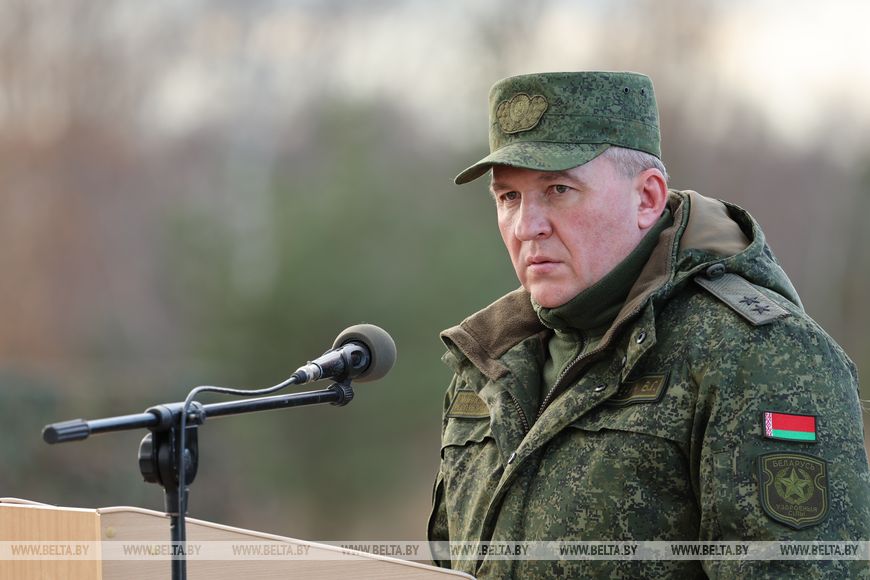

One of the accomplished tasks is the enhancement of the combat potential by increasing the combat component of the army. “It has been achieved primarily thanks to the optimization of normal activities, by means of setting up new units and enlarging the existing ones, by merging them with commands and army units, by optimizing the managerial staff. We’ve managed to accomplish a great deal in equipping our troops with modern weapon systems. This year we’ve commissioned over 200 various samples of weapons, military hardware, and special hardware. On the whole, this year the Armed Forces have received over 35,000 various samples of hardware and military technology,” the minister noted.
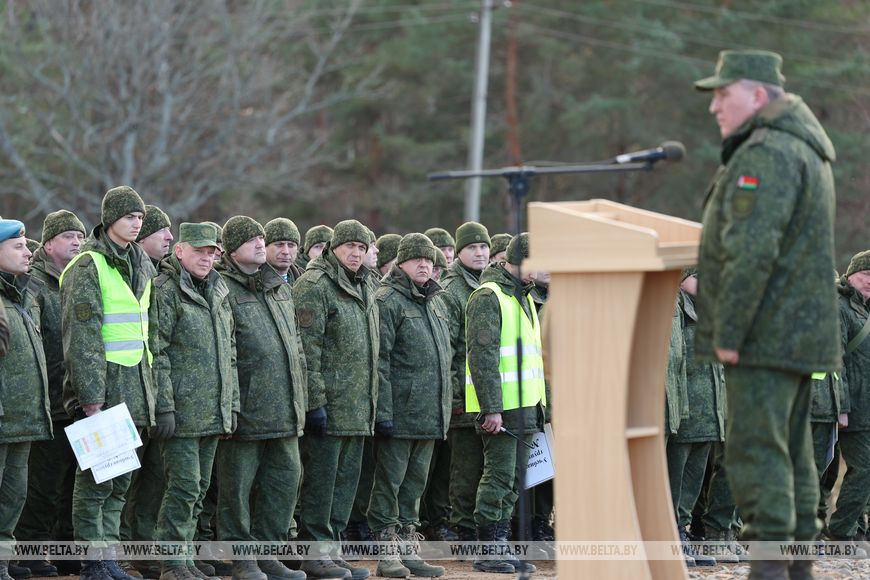
A seminar for senior personnel of Belarus’ Armed Forces took place in a military training area in Lepel District, Vitebsk Oblast on 4 November. The purpose of the seminar was to get the army officers to work out unified understanding of the sequences and methods of training functionaries of military command bodies and troops in the new academic year.
Since 1 January 2025, Belarus has hosted 196,855 travelers from 38 countries included in the visa-waiver program, with most of them arriving from neighboring Lithuania, Latvia and Poland, BelTA learned from the State Border Committee.
A total of 1,228,592 European residents have visited Belarus since 15 April 2022. They included 394,668 visitors from Latvia, 655,021 people from Lithuania and 125,897 visitors from Poland. On 19 July 2024 the visa-waiver program was extended to include 35 more countries. A total of 53,006 citizens of these countries have visited Belarus.
The border committee also recalled that the head of state extended the visa-waiver program for citizens of 38 European countries. Foreigners will be able to come to Belarus without a visa until 31 December 2025. Detailed information about the visa waiver is available in the special section on the website of the State Border Committee and the Border of Belarus app.
This year marks Belarus’ second participation in the Miss Universe pageant, an event that will feature representatives from 134 countries. The nation will be represented by the beautiful Alena Kucheruk, winner of the Miss Belarus 2025 title. Since winning the coveted crown, she has had not a single free minute, focusing all her energy on preparing for the international competition. BelTA correspondents spoke with the professionals assisting the Belarusian beauty, learning their inspiration for creating looks meant to amaze the world.
“We are currently in the final stages of preparation for Alena Kucheruk’s flight to Bangkok, Thailand. The competition finals will take place on 21 November, but our beauty will fly there on 1 November. A great deal of work has been done this month to ensure she feels confident,” said Bozhena Yeremich, director of the National Beauty School.
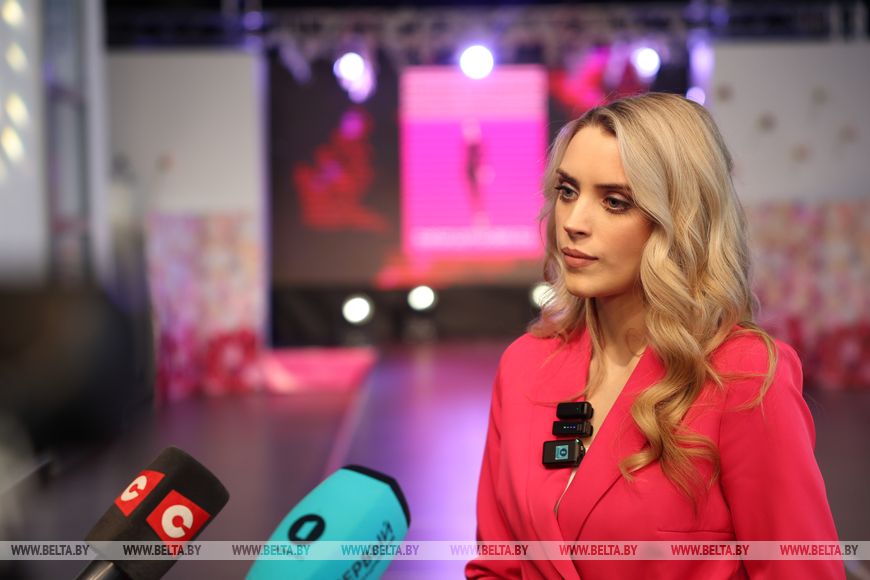
Preparations have focused on the runway walk, rehearsing the competition segments and performances for the finals. This includes the national costume show, a swimsuit competition, an evening gown competition and several other segments. Alena has also received training in makeup, hair styling, acting, and English language.
A professional team has crafted Alena’s looks. Designers Tatiana Yefremova and Irina Rombalskaya combined flowing silks and metallic fabrics with gilded leather and chromed corsets. They used these same materials to create an evening look for the Miss Universe pageant, where a silk bottom seamlessly blends with a chromed plastic top adorned with real silver accents.
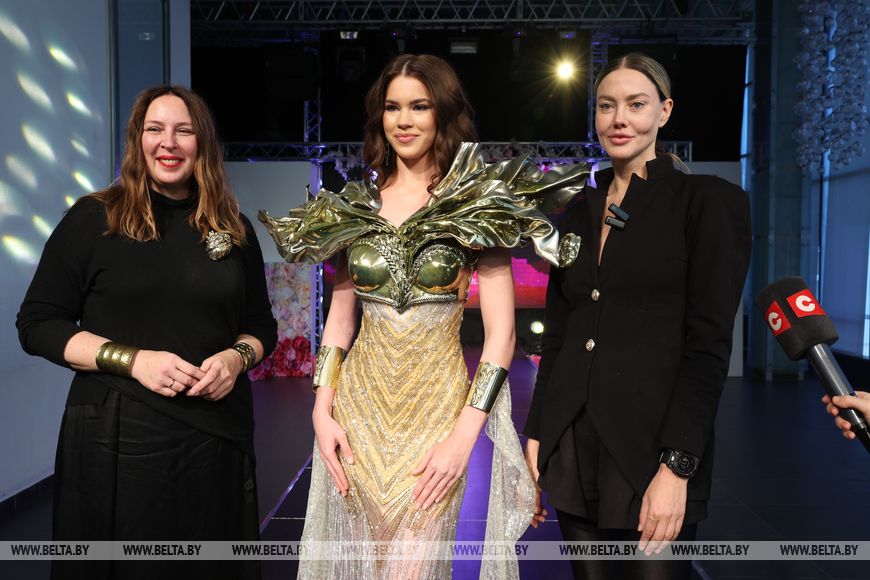
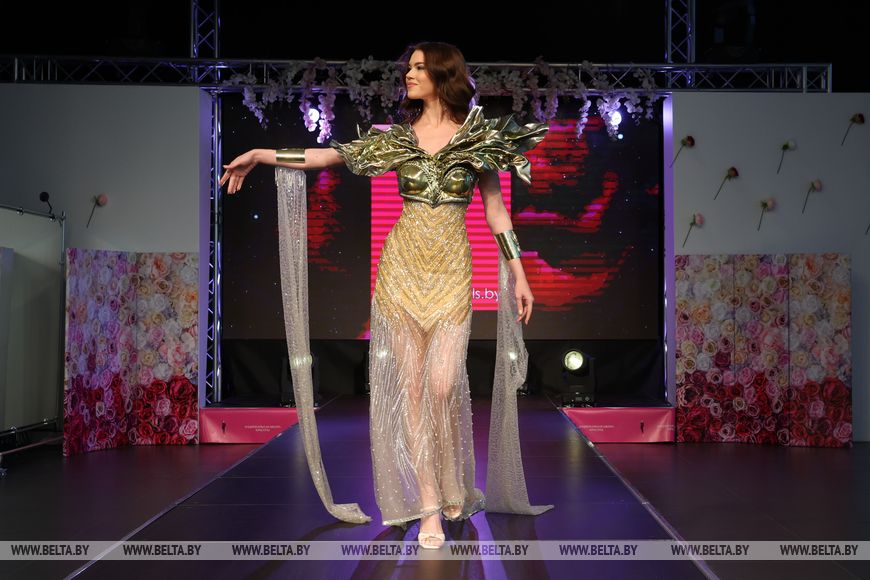 “I sincerely believe that in Belarus, our greatest treasures are our women,” explained Irina Rombalskaya. “This look was inspired, as cliché as it may sound, by Belarusian wheat, but we tried to use this symbol in an unusual way. Through chrome, metal, and gold, we showed that a true Belarusian beauty is not only delicate and fragile, but also strong. In fact, she is the armor of our country, ready to defend the homeland and uphold the honor of Belarus on the international stage.”
“This is entirely handmade; every single stalk is sculpted by hand,” added Tatiana Yefremova. “Through this handcrafted work, we tried to convey to Alena a piece of our strength, love, and kindness. Our latest collections, which we present internationally, are an ode to the Belarusian woman. This evening gown is also a song about the Belarusian girl, only interpreted in a new way.”
They developed the idea for the dress together with representatives of the National Beauty School, working around the clock for three weeks. During their work, they reviewed numerous outfits from representatives of African and Asian countries, known for their riot of color. But, deciding that it was “not our DNA,” Tatiana Yefremova and Irina Rombalskaya chose to forge their own path and showcase what truly symbolizes Belarus.
“The dress is very comfortable. Most importantly, I can breathe freely in it. I love that it gives me strength, and I feel much more confident,” noted Alena Kucheruk.
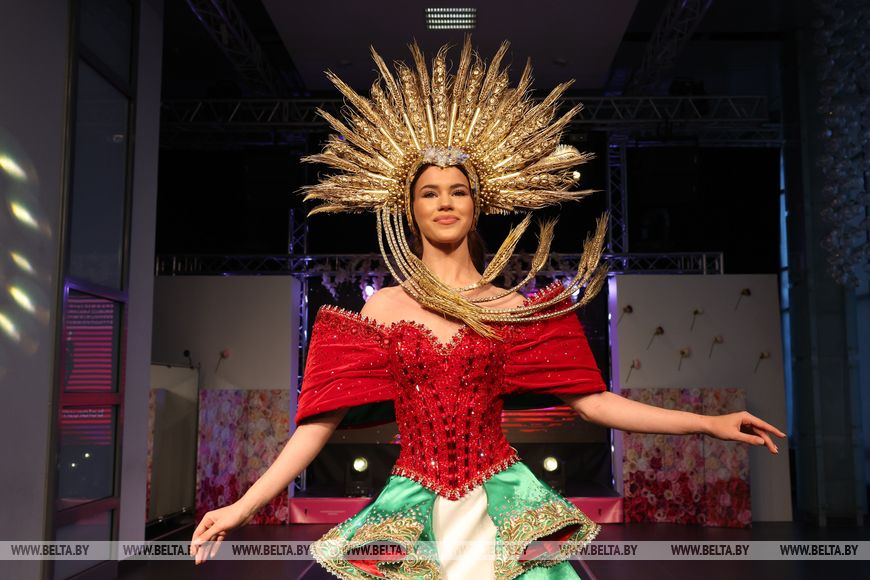
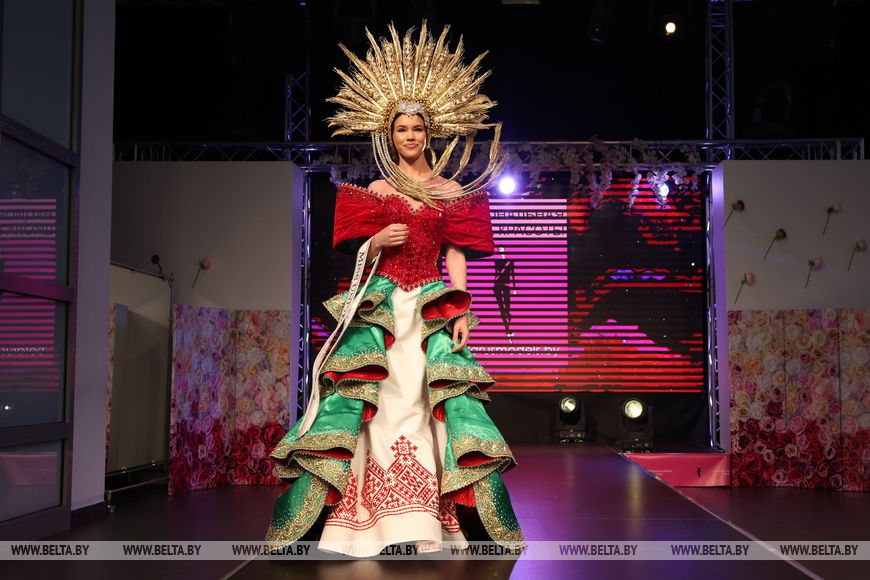
The national costume, created by Belarusian designer Dmitry Titushkin in the style of the national coat of arms and flag, showcases Belarusian national identity. It incorporates 30,000 gems, weighs 11 kg, and took two months to complete. Alena Kucheruk admitted that the costume initially seemed too heavy, but after numerous rehearsals, she grew accustomed to it and now feels comfortable.
Bozhena Yeremich noted that the pageant will also feature a charity evening, where each country will present a charitable item. Alena Kucheruk will showcase the new perfume “Belarus”, created by perfumer Nikolai Yarets. The scent combines the aroma of mown grass with lemon, as well as the perfumer’s personal favorite – the scent of peonies from his mother’s garden. The character of the perfume is enhanced by notes of patchouli, oakmoss, and vanilla, creating a rugged woody fragrance with a subtle feminine touch. The “Belarus” perfume is part of a collection that also features fragrances associated with Minsk, outer space, the beauty of Belarusian girls, and the nation’s blue lakes.
By leveraging artificial intelligence, banks can achieve a higher level of security for their clients’ data, First Deputy Chairman of the Board of the National Bank of Belarus Aleksandr Yegorov said at the International Banking Council meeting held in Minsk to discuss the opportunities and risks of applying artificial intelligence in the banking system, BelTA has learned.
“Artificial intelligence represents the natural evolution of machine learning, a technology the banking sector has used for decades. As the next step, AI is a powerful force for modernizing the banking industry, primarily by optimizing a vast number of internal business processes and enhancing everyday customer experiences,” Aleksandr Yegorov noted.
He believes that the use of artificial intelligence helps reduce costs and more effectively process the large amounts of data accumulated by banks and other financial institutions. “This is crucial for enhancing security for both banks and their customers. Furthermore, a long-established practice that is now becoming more convenient and cost-effective is the move toward a higher degree of personalization, allowing banks to provide precisely the offers their customers need,” he emphasized.
Belarusian banks increased lending to the domestic economy by 14% in January-September 2025, Chairman of the Board of the National Bank Roman Golovchenko told reporters following his report to the president of Belarus.
“I informed the president that our efforts to resource the economy have been quite successful this year, with bank lending to the economy growing by 14% in the first nine months of the year,” the National Bank chief said.
Roman Golovchenko also highlighted the rapid growth in investment lending: “This is not a natural development. It is part of the National Bank’s policy to stimulate investment lending. Over the first nine months, we issued Br4.5 billion in investment loans. This is almost 60% more than last year.”
Belarus’ peace initiatives align with the aspiration of the Eurasian peoples for peace and stability, Deputy Director of the China-Belarus Development Analysis Center of the Chinese Academy of Social Sciences Zhao Huirong said during the 3rd Minsk International Conference on Eurasian Security in Minsk on 28 October, BelTA has learned.
“This is my third visit to the Eurasian security forum, and I believe it is extremely important as it focuses on ways to promote security in Eurasia,” Zhao Huirong said. “Currently, Eurasia is facing serious security challenges. In particular, geopolitical confrontation is intensifying, local conflicts show no prospects of ending, and the arms race is escalating.”
“In addition, Eurasian countries are facing non-traditional security threats, including terrorism, extremism and separatism. The problems of cybersecurity, biosecurity, space security, and climate change are also pressing. The development of science and technology, artificial intelligence and other achievements open up new channels and forms for the spread of these non-traditional security threats,” the Chinese representative noted.
She emphasized that, apart from this, countries are facing serious challenges on the path to sustainable development.


